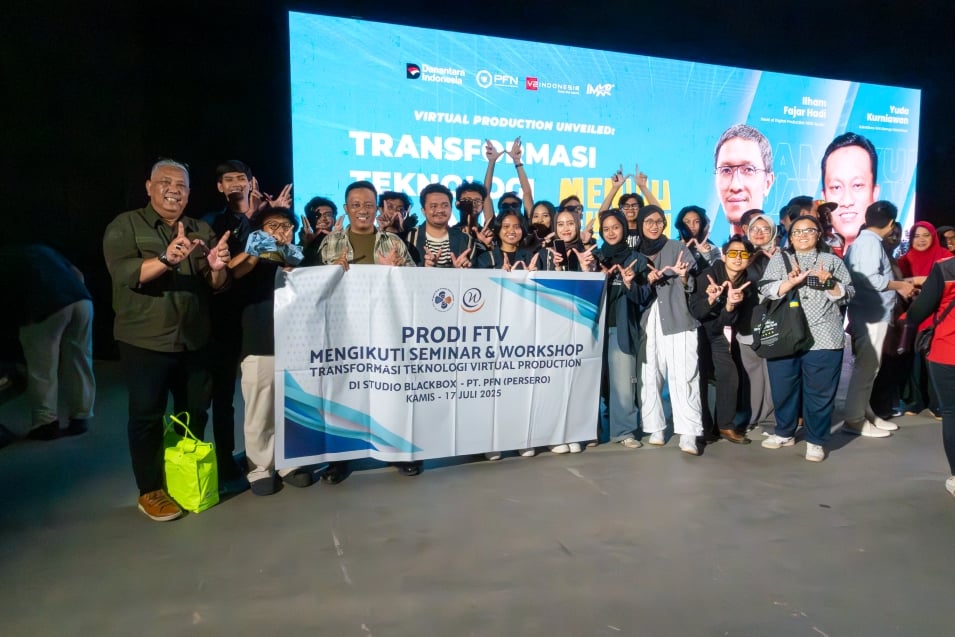

JAKARTA – Hundreds of young filmmakers, including university and high school students, packed PT. Produksi Film Negara (PFN)’s Blackbox Studio to attend a cinematography workshop that thoroughly explored Virtual Production (VP) technology on Thursday, July 17th, 2025. The event, attended by around 300 participants, is intended to introduce cinematography innovations that are predicted to revolutionize the Indonesian film industry with significant cost and production time efficiencies.
This activity was a special invitation from PFN for young talents, including 18 students and two lecturers from the Film and Television Study Program (FTV) FISIP Universitas Widyatama. The seminar and workshop featured industry experts who shared fundamental knowledge about the workflow and implementation of Virtual Production (VP) in a feature film production.
A Thorough Discussion of Virtual Production Innovations
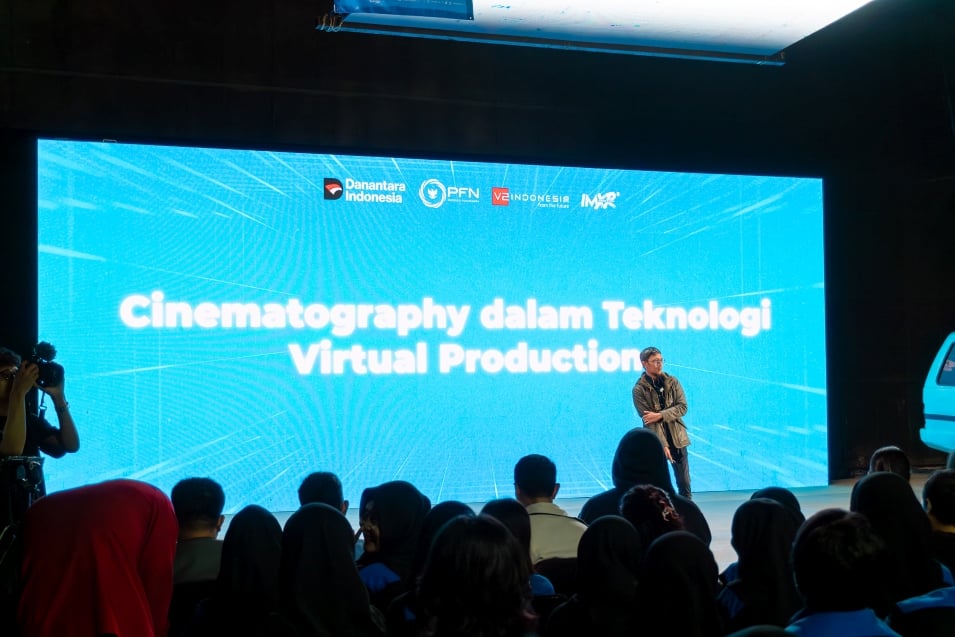
The seminar titled “Cinematography in Virtual Production Technology and Budgeting & Project Management in Virtual Production for Film Production” served as an insightful opening session. Ilham Fajar Hadi, Head of Digital Production at IMXR Studio, explained how VP offers an innovative solution that combines live shooting with virtual backgrounds using giant LED Wall technology. According to him, this technique can cut production costs by up to 50 percent.
Furthermore, Ilham explained that VP is not just a replacement for the green screen, but a production ecosystem that integrates dynamic camera movements with virtual sets with precision. This technology also allows for superior cinematic lighting control and maximizes post-production processes such as editing, color grading, and CGI in real-time on set. This drastically reduces various conventional production constraints such as bad weather, complicated location permits, and safety factors.
Live Practice at Blackbox Studio
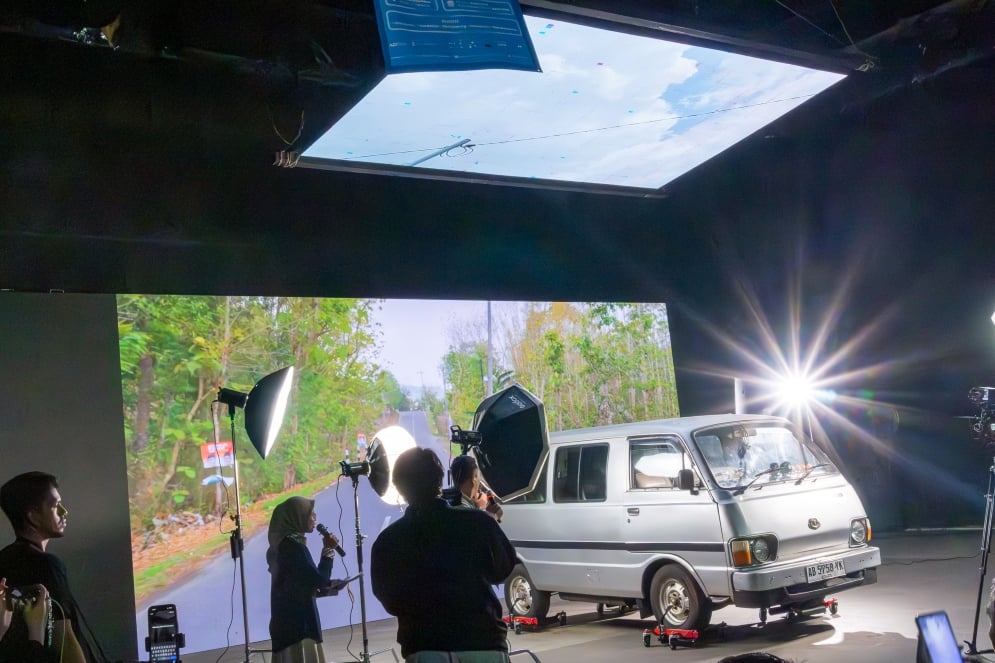
The participants’ enthusiasm reached its peak during the workshop session. Director Yuda Kurniawan, who successfully produced the film “Menuju Pelaminan” using VP technology, demonstrated the filming process live in the Blackbox Studio. Participants were invited to see how scenes inside a minibus were seamlessly combined with visual assets of a trip from Yogyakarta to Padang displayed on the LED Wall.
A Widyatama student who participated in the workshop expressed his admiration. “It was really exciting and very beneficial, because technology is so advanced nowadays. So we no longer need to use a green screen and can take advantage of the blackbox here,” he said. This experience provided a real picture of how VP is capable of creating complex travel scenes without having to actually move locations.
Participant Enthusiasm and Hopes for Collaboration
Positive responses did not only come from students. Della Dwinanti Sumpena, S.T.Sn., M.Sn., one of the supervising lecturers from Univeritas Widyatama, stated that this activity provided a valuable new perspective. “Today was incredibly interesting. We gained new insights, including from PFN, who invited us to see what the workshop was like in practice,” she said. She also sees potential for future collaboration between academics and the film creators who were present.
Another student expressed a similar sentiment, “This is an extraordinary experience, sir, because we were able to visit a national film production. And we all gained very useful knowledge about how virtual production works, what the workflow is like, basically all the practical knowledge.”
The Future of the Film Industry Lies in the Hands of Young Talent
In closing, Ilham Fajar Hadi, as the representative of the committee and practitioner, emphasized the importance of equal distribution of this technological knowledge. “My message to the participants and those who attended this workshop is that I hope the knowledge will be evenly distributed. So that more people will know about the efficiency of virtual production,” he said.
According to him, the progress of the Indonesian film industry depends on the synergy of three main pillars.
“To advance an industry, there must be three things: a community, expertise, and knowledge. Students must also be developed. If these three are advanced, I am sure that the industry will definitely grow,” concluded Ilham. This workshop is expected to be the first step in producing more talents who are ready to adopt technology and bring Indonesian cinema to the world stage.