

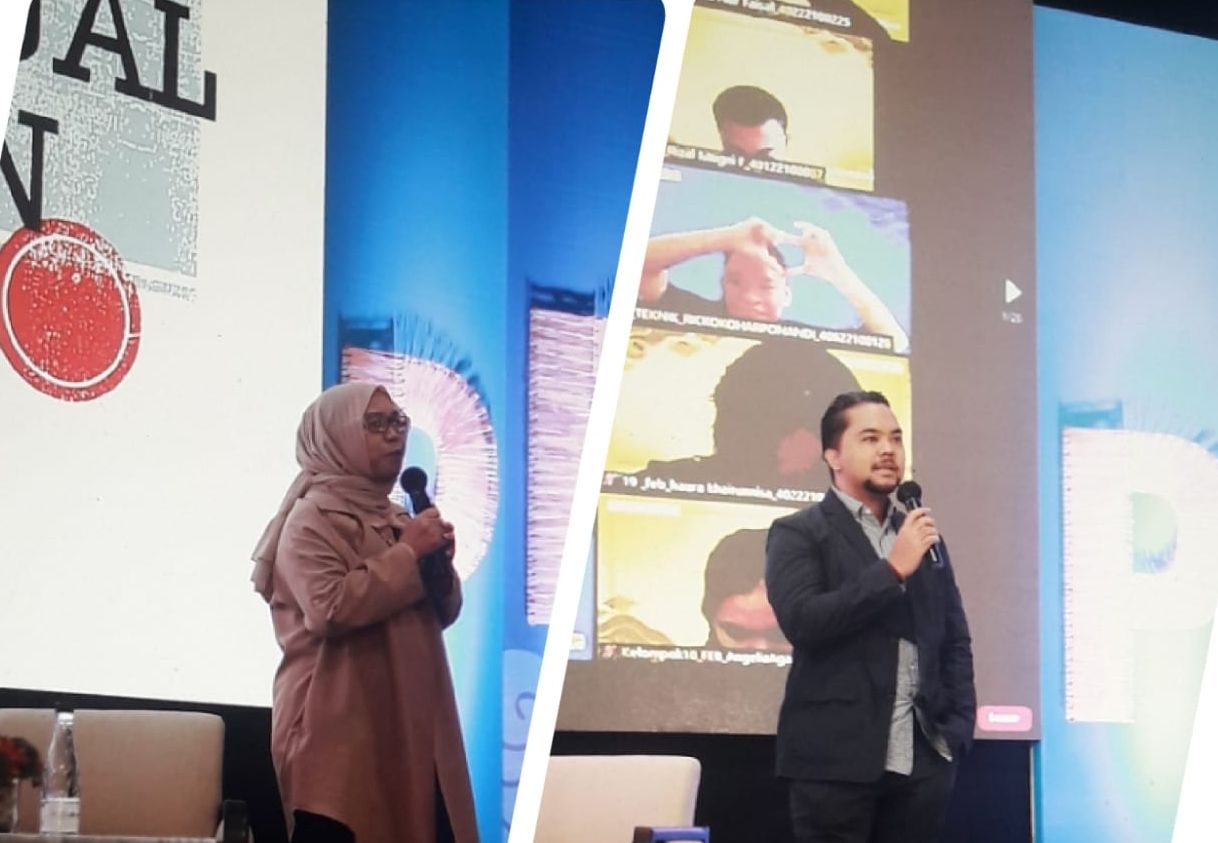
ABACIREBON – On Friday (August 26), thousands of prospective new students at Widyatama University in Bandung received insight into sexual violence in the world of education and anti-radicalism and terrorism from two experts in their fields.
Hj. Listiyaningati, a psychologist, gave a presentation on sexual violence in the world of education, while Enda Nasution, a social media activist, spoke about anti-radicalism, terrorism, and the anti-sexual violence and bullying movement.
In front of 1,592 participants out of 2,102 prospective students participating in the Widyatama University Introduction Program (PPU), which was conducted through an online Zoom meeting and face-to-face classes, Listiyaningati warned that in various cases of sexual harassment and violence, the potential for such crimes, when referring to the perpetrators, is more often committed by adults. “Then who are the victims? It could be children by child perpetrators, children by adult perpetrators, and adults by adult perpetrators.”
Unfortunately, even when problems such as sexual violence occur among students, most victims do not dare to report it, making it difficult to resolve through legal means.
According to psychologist Listiyaningati, currently, victims of sexual violence are not only women, but can also be men. “Whether it is between people of the same sex or from women against men. The psychological impact of all these violent events will generally cause changes in the attitudes and behavior of the victims.”
Hj. Listiyaningati also reminded prospective students that sexual violence generally involves the following acts:
- Groping (touching inappropriately or forcing someone to touch the offender’s private parts or breasts);
- Rape (inserting any object into any body or hole for sexual pleasure);
- Voyeurism (watching the victim at various stages of undressing);
- Exhibitionism (exposing the reproductive organs);
- Pornography (filming or recording videos of children in an indecent manner) and
- Forced prostitution (involvement in prostitution at the command of an adult).
PPU participants are also asked to always be aware, because perpetrators of sexual violence often carry out their actions online. “For example, it starts with online grooming, where someone targets people who are psychologically troubled on social media. The perpetrator pretends to be a very caring and kind person, and ultimately commits abuse.”
In cases of sexual harassment and violence, according to the speaker, offenders do not hesitate to threaten victims in any way possible. “In one case, for example, the offender asked the victim to send explicit photos. Then at some point, the offender used those photos to threaten the victim by threatening to spread them.”
Faced with the possibility of such problems, including threats, victims can immediately report them to the authorities.
He assessed that nearly 95% of cases of sexual harassment and violence occur due to a dysfunctional family environment or the failure of the family to function properly.
Understanding Radicalism
Meanwhile, social media activist Enda Nasution, speaking before prospective UTama students, reminded them that young people, including students, are the easiest targets to be influenced, both positively and negatively.
“This has been proven in various campuses in Indonesia, where students have become a new target for the implantation of radicalism, including through social media,” said Enda.
This social media activist also emphasized the danger that continues to threaten young people and students with the spread of radicalism. “Remain cautious about these ideas, because radicalism perpetrators believe that there is still a lot of potential for radicalism recruitment through social media in particular.”
It should be noted that with digital technology, anyone can become a producer of information and participate in disseminating information, even though the information disseminated may not necessarily be true.
Furthermore, the social media activist conveyed six reasons why young people are vulnerable to radicalism and terrorism:
- Young people and students are groups of people who are searching for their identity;
- They have different understandings of religion;
- They need a sense of togetherness;
- They want to correct what they consider to be injustices;
- They seek thrills and bravery; and
- They sympathize with radical or terrorist groups through the internet.
At the end of his presentation, he reminded the audience that young people and students are the target recruits of radicalism and terrorism. “Once again, you can believe, read everything, and expose yourself to various things, but always think critically. Don’t just believe information from one source,” said social media activist Enda Nasution.