

Thalassemia is a blood disorder characterized by reduced or absent production of normal hemoglobin. Thalassemia usually occurs in areas where malaria is endemic, especially malaria caused by Plasmodium falciparum.
What is thalassemia? It is a hereditary (genetic) disease in which there is a blood disorder (disruption in the formation of red blood cells). Red blood cells are essential for transporting oxygen needed by our bodies.
In people with thalassemia, because their red blood cells are damaged (abnormal shape, break down quickly, reduced ability to carry oxygen), the body of a thalassemia patient will lack oxygen, become pale, weak, tired, short of breath, and in dire need of help, namely a blood transfusion.
Thalassemia is a blood disorder characterized by reduced or absent production of normal hemoglobin. Thalassemia usually occurs in areas where malaria is endemic, especially malaria caused by Plasmodium falciparum.
What is thalassemia? It is a hereditary (genetic) disease in which there is a blood disorder (disruption in the formation of red blood cells). Red blood cells are essential for transporting the oxygen needed by our bodies.
In people with thalassemia, because their red blood cells are damaged (abnormal shape, break down quickly, reduced ability to carry oxygen), the body becomes oxygen-deficient, causing the patient to become pale, weak, tired, short of breath, and in dire need of help in the form of a blood transfusion.
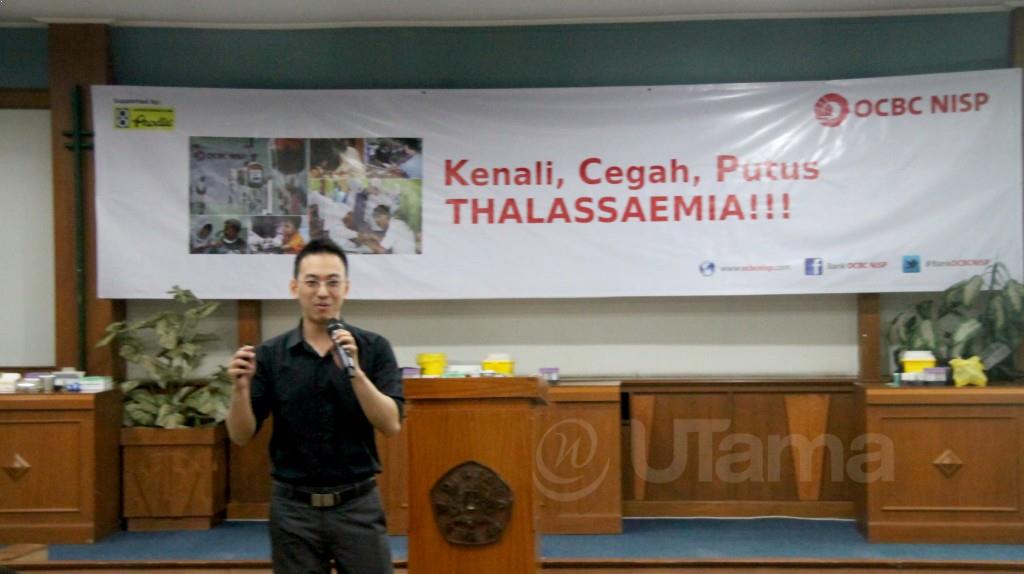
On Tuesday (2/11/14), Bank OCBC NISP, in its CSR (Corporate Social Responsibility) program, collaborated with Widyatama University to hold a seminar on thalassemia with the theme “Avoid Thalassemia: Recognize, Prevent, Stop”. The event was attended and opened by the Rector of Widyatama University, Dr. H. Islahuzzaman, S.E., M.Si., Ak., CA, accompanied by the Vice Rector for Learning and Student Affairs, Prof. Dr. Davidescu Cristiana V. M., M.A., and the Head of the Student Affairs Bureau, Asep Sudrajat, S.E., MT.
There was great enthusiasm among students and staff who wanted to learn about the dangers and prevention of thalassemia, and many of the audience members had children, friends, or relatives who were affected by thalassemia.
Thalassemia occurs when there is an abnormality in the genes that regulate the formation of hemoglobin chains, thereby disrupting their production. This disruption in the formation of globin chains will cause damage to red blood cells, which will eventually lead to the rupture of these cells. Based on this classification, there are several types of thalassemia, namely alpha, beta, and delta thalassemia.
The event, which took place on the 6th floor of Building B, also explained how to prevent thalassemia. To prevent thalassemia in children, couples who are planning to get married need to undergo blood tests to check their hemoglobin levels and red blood cell profiles. The chances of recovery from thalassemia are still relatively small due to physical conditions, the availability of donors, and costs. In order to survive, thalassemia patients require regular treatment, such as regular blood transfusions to maintain their Hb levels at ± 12 g/dL and serum ferritin tests to monitor iron levels in the body. Thalassemia patients are also required to avoid salted or pickled foods and fermented products that can increase iron absorption in the body. Two methods that can be used to treat thalassemia are bone marrow transplantation and stem cell technology. In 2008, in Spain, a baby was selectively implanted to become a treatment for his brother who suffered from thalassemia. The child was born from an embryo that was selected to be free of thalassemia before undergoing in vitro fertilization implantation. Immunocompatible placental blood was stored for transplantation to the sibling. The transplant was successful. In 2009, a group of doctors and specialists in Chennai and Coimbatore recorded a successful treatment of thalassemia in a child using placental blood from his sibling.