
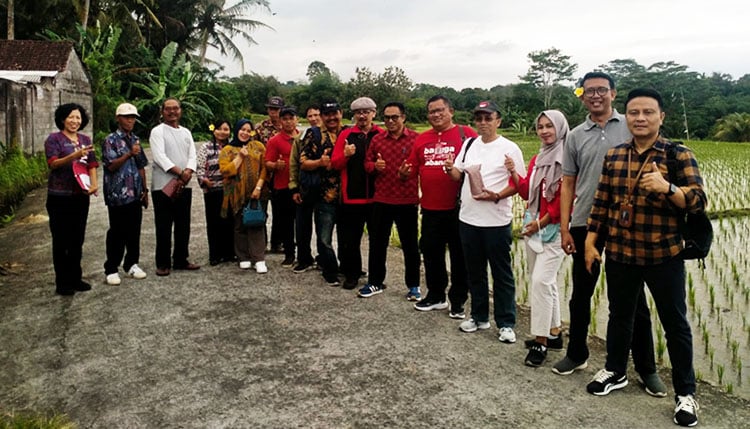
JABAR NEWS (BJN), Tabanan Regency, Bali, Thursday (07/25/2024) – Widyatama University and the Sumedang Regency Government, together with farmers from Cikurubuk Village, visited Tabanan Regency, Bali to learn about the success of the organic rice farming system there. The activity took place over two days, on Tuesday (July 23, 2024) and Wednesday (July 24, 2024), together with farmers from Subak Jaka, Kukuh Marga Village, and the Tabanan Agriculture Office.
On this occasion, farmers from Cikurubuk Village and the Sumedang Regency Government, accompanied by Widyatama University Bandung, were very enthusiastic in discussing with farmers from Subak Jaka, Kukuh Village, who have obtained organic certification from the Kerta Bali Sejahtera Organic Certification Agency, Bali Provincial Government. The guests from West Java Province intended to emulate the organic or environmentally friendly farming practices that have been developed by Subak Jaka farmers for eight years.
Pekaseh Subak Jaka of Kukuh Marga Village, Ir. Wayan Yusa, said that his party actually started environmentally friendly agriculture in 2016. “Coincidentally, at that time there was a program from the Tabanan Regency Government called ‘Gerbang Pangan Serasi’ (Harmonious Food Gate), which was supported by government assistance in the form of seeds, organic fertilizer, and 10 cows.”
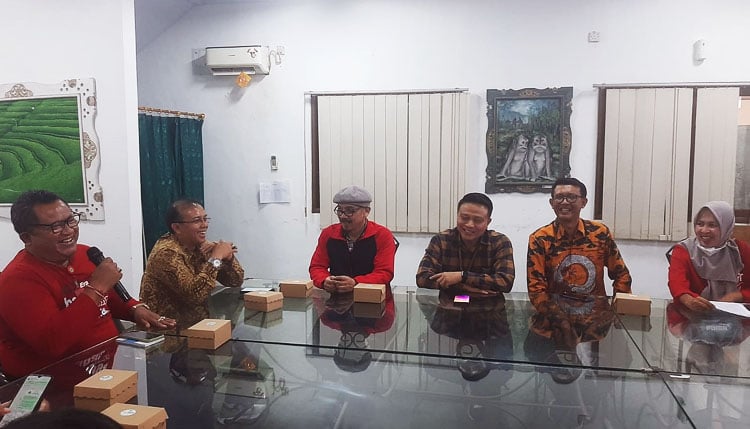
Discussion on planning and strategies for developing healthy organic rice by the head of the Tabanan Agriculture Office – (Source: DM/BJN)
According to Ir. Wayan, the initial commitment to developing environmentally friendly agriculture was not unreasonable. In fact, it was due to an appeal from the Agriculture Office for farmers in Tabanan to implement environmentally friendly agriculture by not using chemical fertilizers and pesticides. This was followed by a commitment from farmers who voluntarily wanted their agricultural land to be developed for environmentally friendly agriculture.
“We started by developing around 10 hectares, and by the end, we had expanded,” said Ir. Wayan.
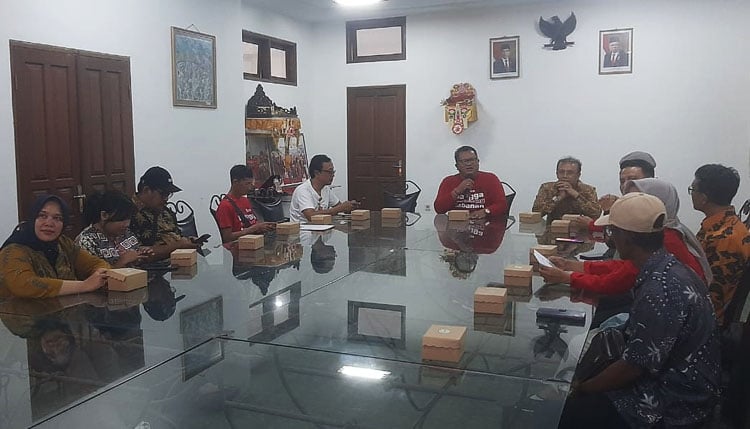
Presentation by the Head of the Tabanan Regency Agriculture Office explaining the organic rice farming system – (Source: DM/BJN)
The farmer, who holds a degree in agriculture, added that their efforts bore fruit three years later when, in 2019, Subak Jaka applied for LeSOS organic certification. They finally received recognition for their organic farming practices with the release of the LeSOS organic certificate. This is an achievement that should be noted and is a source of pride for the farmers of Subak Jaka.
Meanwhile, Jero Susan, accompanied by the Head of Kukuh Marga Village and the Head of the Tabanan Agriculture Office, said that the total area of certified organic agricultural land in their village reached 10 hectares.
“Another 17 hectares have implemented organic farming without chemicals. However, they have not yet received organic certification,” said Jero.
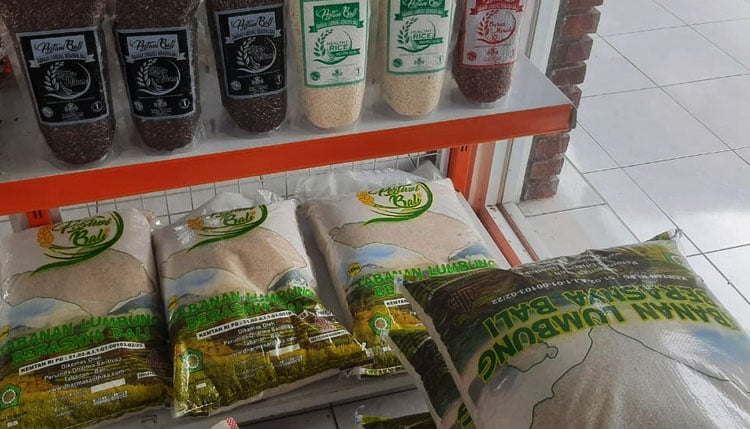
An example of rice produced from healthy organic rice farming by farmers from Subak Jaka, Kukuh Marga Village, Tabanan Regency, Bali – (Source: Deden/BJN)
Jero Yusan added that each area of agricultural land requires 25 kilograms of organic fertilizer or compost. Fertilization is carried out from the beginning of agricultural land cultivation, with five kilograms of compost fertilizer.
“Then, when the rice plants are 15 days old, 10 kilograms of fertilizer is applied, and at the end, when the rice plants are 30-35 days old, another 10 kilograms of fertilizer is applied. For liquid fertilizer, we use VOC from rabbit urine and cow urine,” said Jero enthusiastically.
Meanwhile, regarding water use, the Subak Saka farmers have created a water filtration model in the upstream area using water hyacinth plants.
“The water hyacinth plants filter the water that will enter the organic farmland,” said Jero.
The success of Subak Saka farmers in cultivating healthy organic rice is certainly not easy. Although their harvests are abundant, they face obstacles in terms of marketing.
“At the beginning of production, the market was open because of the local government’s commitment to purchase healthy rice, which would then be marketed to Tabanan Regency employees. Unfortunately, because the demand was quite high and not proportional to the harvest, it was discontinued,” said Jero.
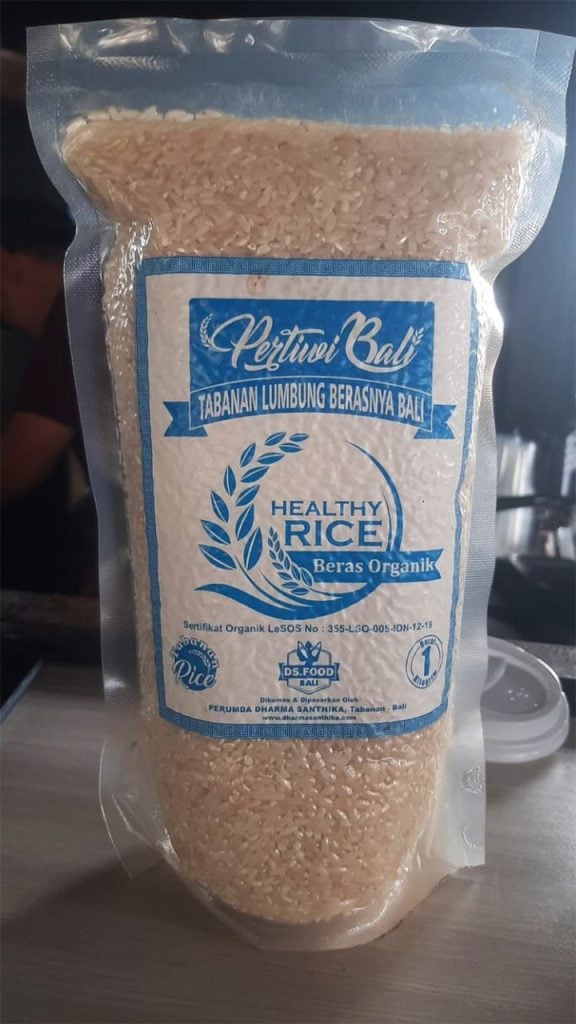
Organic rice products under the trademark “PERTIWI BALI” are healthy rice that has been widely distributed as one of the leading products – (Source: Deden/BJN)
The Subak Saka farmers did not give up in the face of these obstacles. They tried to find a solution. Then they made a breakthrough by collaborating with organic farming enthusiasts from India and Germany.
“This pattern of cooperation with third parties is still ongoing. In fact, they market this healthy rice to a number of tourist accommodations, such as hotels and restaurants. In terms of organic rice production, the average yield is five tons per hectare with a selling price of Rp 8,500 per kilogram for dry grain,” concluded Jero.
Head of Cooperation at the Sumedang Regency Secretariat, Dr. Asep Dadang Darmawan, M.Pd., who was part of the delegation from West Java, said that his team felt many benefits after conducting a study tour on organic farming at Subak Jaka Desa Kukuh Marga, Tabanan Regency, ranging from the commitment of farmers who were willing to allocate their farmland for organic farming to the management or cultivation and marketing of post-harvest production.
“Hopefully, we can apply this to farmers in Cikurubu Village because we are currently developing organic farming,” said Asep.
On the other hand, Drs. Deden Maulana Anggakarti, M.Ds. representing the Rector of Widyatama University Bandung, Prof. Dr. H. Dadang Suganda, M.Hum, who acted as a researcher and lecturer at the Faculty of Communication Design (FDKV) at Widyatama University, said that after hearing the explanations and discussions from the farmers in Subak Jaka, Kukuh Marga Village, the farmers’ commitment is the key to the success or failure of organic farming. There is also government intervention through a fertilizer subsidy program for organic farming.
“We must uphold this commitment for the sustainability of organic farming, which is currently being implemented in Sumedang Regency,” concluded Deden. (DM/BJN)