

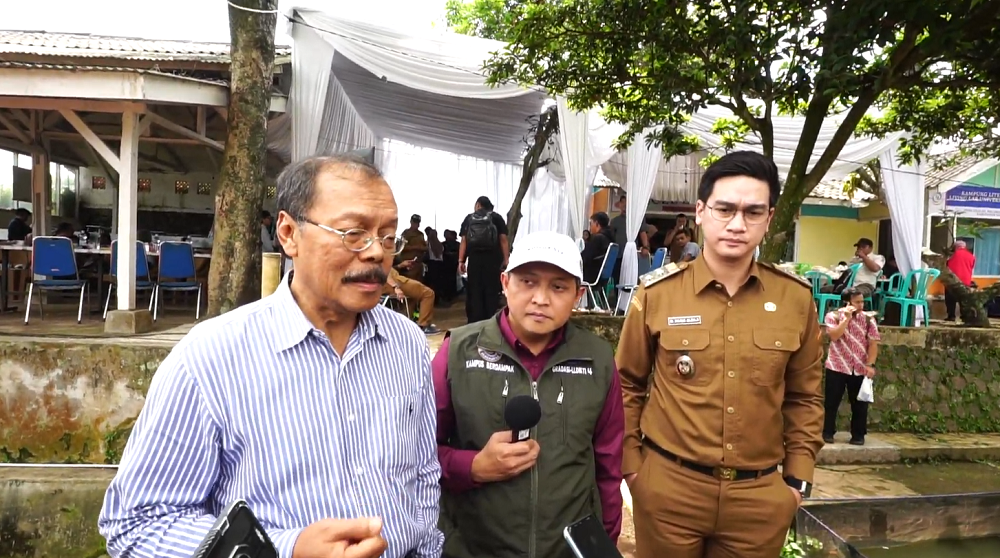
Sumedang, July 8th, 2025 — Universitas Widyatama continues to demonstrate its commitment to addressing real community challenges through research-based innovation. Located in Cileles Village, Jatinangor District, Sumedang Regency, Widyatama has built an artificial intelligence (AI)-based Living Lab as a solution to the problems faced by the agriculture and livestock sectors.
This Living Lab is not just an academic project, but a model of integration between research, rural community empowerment, and innovation commercialization that directly targets community needs. One of the concrete results of this development is an AI-based tool for detecting the quality of catfish pond water that can automatically regulate water pH.
“This tool was born out of the real needs of catfish farmers who often have difficulty maintaining water stability amid changing weather and limited measuring tools. With AI support, the entire process can be controlled automatically, more accurately, and can be replicated widely,” said the Rector of Universitas Widyatama, Prof. Dr. H. Dadang Suganda, M.Hum., while directly observing the location of the activity on Tuesday (7/8/2025).
Furthermore, Prof. Dadang explained that the development of this tool is part of the university’s strategy to ground research and innovation results in order to have a real impact on society. This initiative is also complemented by the development of a circular economy-based ecosystem and the strengthening of local MSMEs.
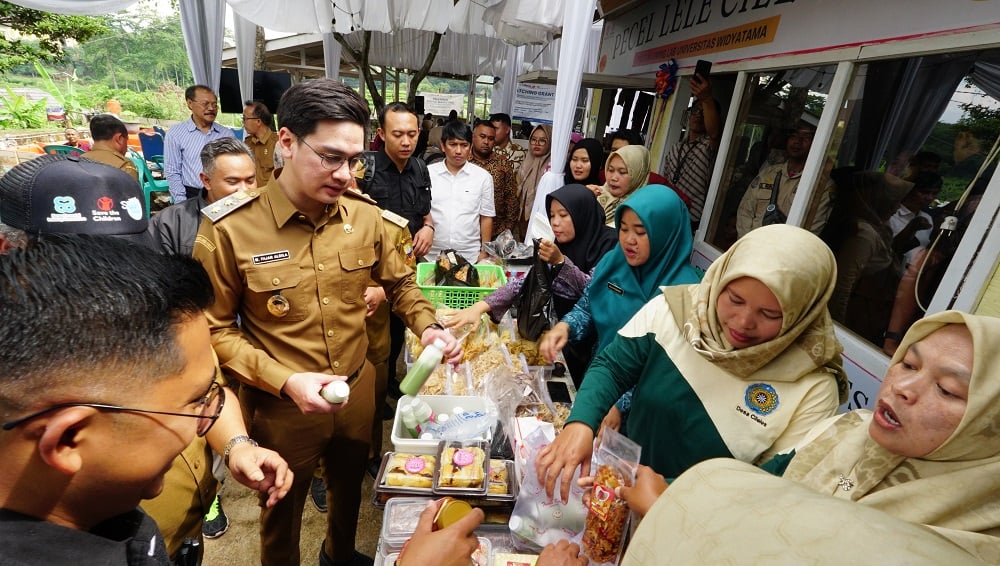
“We don’t stop at developing tools. We are building an ecosystem: technology production by the community, distribution through local MSMEs, and consumption by the surrounding community. This is our effort to make research part of the people’s economic solution,” he said.
Through this Living Lab, Widyatama University hopes to become a pioneer in the use of AI to support strategic sectors, as well as strengthen the synergy between the campus, the community, and the business world in realizing sustainable development.