
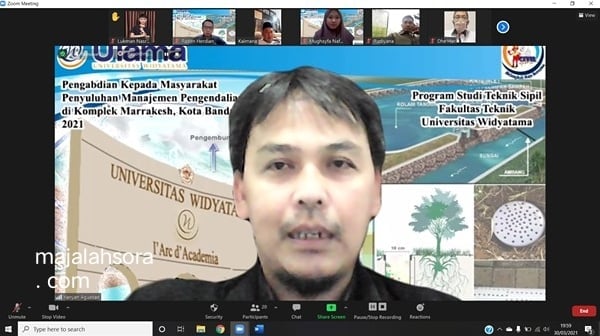
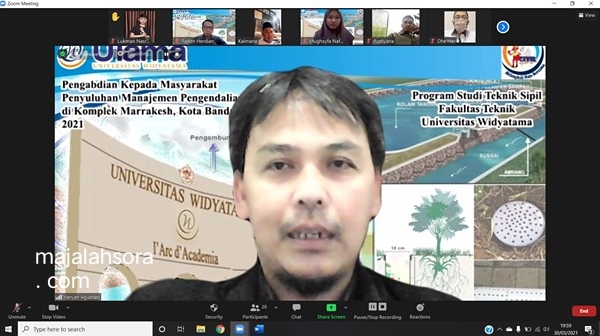
Yanyan Agustian, Ph.D., Head of Civil Engineering Study Program, UTama
Yanyan Agustian, Ph.D., Head of Civil Engineering Study Program, UTama
The problem of urbanization is not limited to traffic congestion. High population growth and demand for proper housing have triggered rapid residential development and changes in land use.
Unfortunately, these changes in area function and land use are not balanced with proper Green Open Space (GOS) planning. This is particularly true in terms of water management (drainage channels, retention ponds, etc.), thereby increasing the potential for flooding in these areas.
Therefore, a comprehensive study is needed to address this issue, in order to create a sustainable water management system that can control and minimize the potential for flooding or waterlogging.
Civil Engineering, Faculty of Engineering, Widyatama University (UTama) in this case, is trying to implement this water management system in the context of housing. The goal is to create a sustainable water management system, from drainage channels to retention ponds and other technologies.
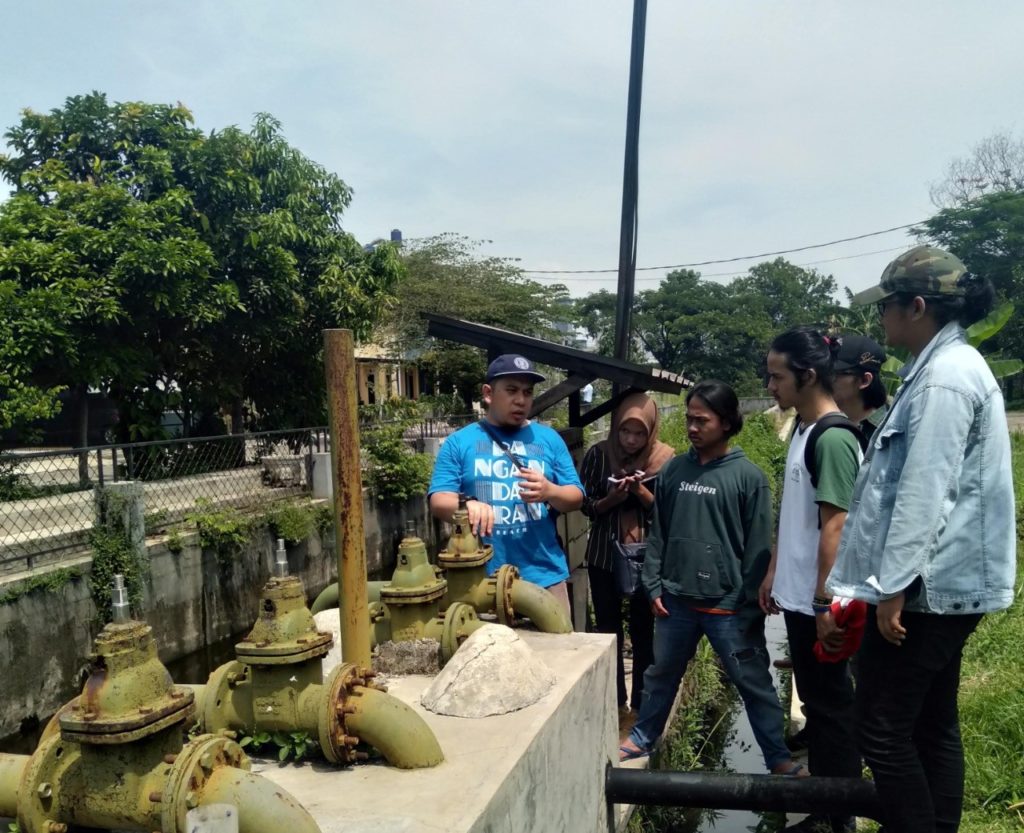
The location used as an example in this study is the De Marakkesh Complex in Derwati Village, Rancasari District, Bandung City.
“This PKM program is a routine activity of the UTama Civil Engineering Study Program. It aims to provide insight and scientific recommendations to the community on current phenomena,” said Yanyan Agustian, Ph.D., Head of the Civil Engineering Study Program.
“In this PKM, the Civil Engineering Study Program at UTama raised the issue of flood control or waterlogging (cileuncang) in urban areas, with the Marakkesh Complex in Bandung City as the study location,” he added.
This PKM was held on Tuesday (30/3/2021) via Zoom meeting due to the ongoing pandemic.
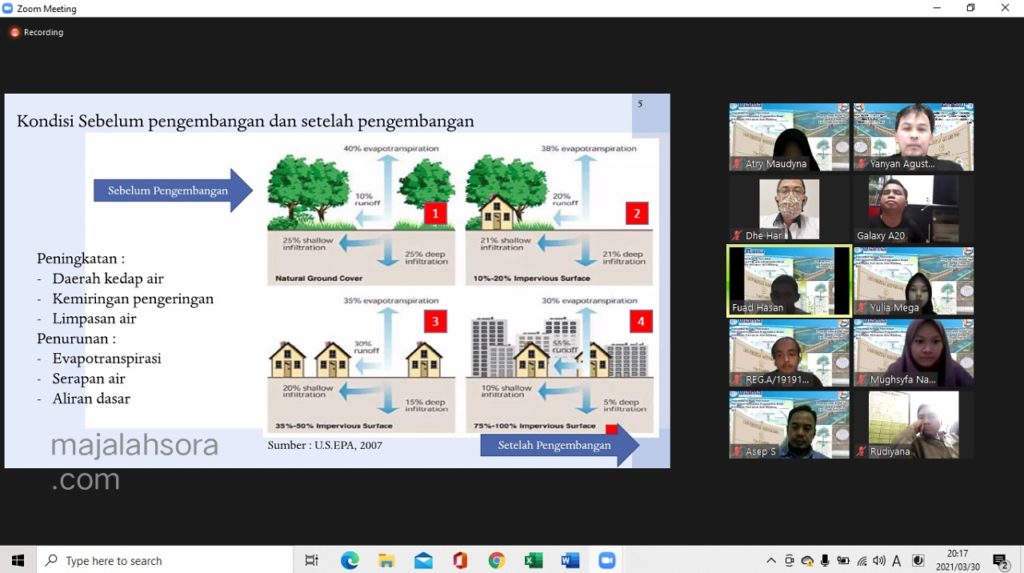
Attended by local government officials (RT), community leaders, DKM administrators, students and lecturers from the Civil Engineering Study Program, UTama.
In conclusion, the Civil Engineering Study Program, UTama, recommended several measures to control flooding in the De Marakkesh Complex, Bandung City.
These include mapping and repairing the drainage network, increasing the capacity of retention ponds, regulating pump operations, installing biopores and infiltration wells, and creating a rainwater harvesting system.
Yanyan further said that the RWH system is expected to channel rainwater directly into infiltration wells, which will not only reduce the potential volume of flooding but also increase groundwater capacity.
“Biopori will help accelerate the absorption of rainwater that falls on land other than rooftops. Water that is not absorbed into the ground will be channeled through a drainage network and temporarily stored in a retention pond. When the retention pond is full, a pump will be operated to channel the water from the pond to the Cipamokolan River near the Marakkesh Complex,” said Yanyan.
Meanwhile, Suhendar, head of RT 04 Marakkesh Complex, Bandung City, is very grateful to the UTama Civil Engineering Study Program for volunteering their time and energy to help solve the flooding problem in the Marrakesh Complex.
“We hope that this scientific study can be applied and implemented in our complex, so that in the future, flooding will no longer occur during heavy rains,” said Suhendar.
The event concluded with a question-and-answer session with Zoom Meeting participants to gather feedback and input regarding the next phase of the plan.
(Source: majalahsora.com)