
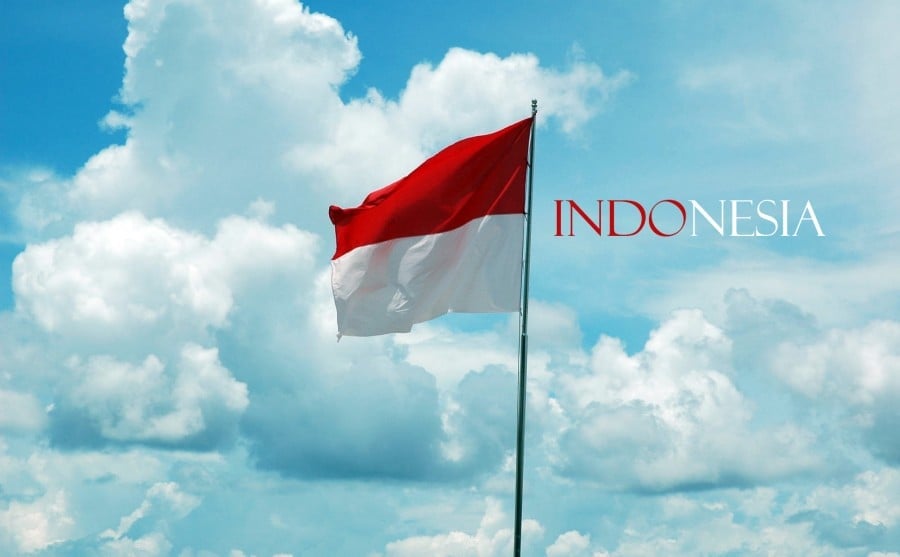
The Youth Pledge event 88 years ago was, among other things, a political manifesto on language. In the context of language politics, Indonesian was positioned not only as the official language of the state but also as the language of unity for the Indonesian people, and at the same time, Indonesian functioned as a lingua franca (common language) for Indonesians throughout the country. Therefore, we should be proud of the content of the final statement of the Youth Pledge after the other two statements, namely that we are one nation of Indonesia and one people of Indonesia.
“We, the youth of Indonesia, uphold the language of unity, Indonesian.”
If we examine the phrase “uphold” in one of the passages of the Youth Pledge above, it has three meanings, namely: to honor, to respect, and to obey (KBBI, 2008:593). The last part of the Youth Pledge implies that the Indonesian people (the sons and daughters of Indonesia) have an obligation to honor and respect the Indonesian language by using it properly and proportionally. That is how we should treat Indonesian as our language of unity. However, this attitude towards language still leaves one major question: “Do we treat it this way even though the Indonesian language is surrounded by foreign languages (i.e., English) and everyday vernacular (vernacular) in the Indonesian context?” This is not an immeasurable pessimistic question; indications and phenomena of poor language attitudes are already beginning to be felt. Day by day, the aroma of the mixture of the three (foreign languages, Indonesian, and colloquial language) is becoming more and more fragrant.
On various occasions, it is often found that officials, ordinary people, academics, students, and other members of the scientific community still like to insert foreign languages into their speech and writing. The use of foreign languages is not prohibited in either spoken or written language as long as it remains within reasonable limits. There are three possible considerations regarding the reasons for using foreign languages. First, Indonesian may be considered insufficient to convey the meaning in the mind of the speaker/writer. Second, the use of foreign languages may still be believed to increase the prestige and status of the speaker/writer, so that anyone who sees, hears, or reads it will consider them to be educated (intellectual). Third, there may be a lexical gap, understood as a word that has no equivalent in Indonesian, and this phenomenon usually occurs because it is related to cultural aspects.
The widespread use of foreign languages is triggered by at least five factors, namely: 1) rapid development of communication technology, 2) sluggish language and linguistics competitions, 3) relatively rigid language learning, 4) lack of language role models, both in spoken and written language, and 5) consistency of language policy.
The rapid development of technology ‘forces’ people to think quickly, which in turn affects the use of language in a faster and more concise manner without regard to the applicable rules. For example, the word ‘sudah’ becomes ‘dah’, the word ‘belum’ becomes ‘lum’, the word “memang” becomes “emang”, the words “pakai”, “memakai”, “dipakai” become “pake”, “make”, and “dipake” respectively, the phrases “terima kasih” and “tidak tahu” become ‘makasih’ and “gatau” respectively, and so on. Another very interesting and rather sad example is an expression/sentence used by a student when presenting his research proposal. He said the following: “From this data, I conclude that….” Clearly, the use of the word ‘conclude’ in this sentence is very inappropriate for such a formal context. The habit of using incorrect words/phrases may carry over into formal linguistic contexts such as lectures, thesis examinations, and various other formal linguistic contexts. It is possible that language errors occur due to a lack of experience in using language as a means of learning to communicate ideas, both verbally and in writing, especially when participating in competitions related to language use.
The number of competitions in the field of language and linguistics organized by educational institutions (public/private), educational advocacy organizations (educational NGOs), and media (print/electronic) is still limited. In addition, these language and linguistics competitions have not been able to attract potential participants at the elementary, secondary, or higher education levels. This situation will have an impact on the quality of the competitions. The low level of interest in linguistics competitions is inseparable from the quality of language learning in schools and universities.
Indonesian language learning in schools does not seem to touch on the issue of language users’ attitudes towards their language. The curriculum related to Indonesian language learning does not seem to focus on how to respect and appreciate the Indonesian language in a way that instills pride in us as users of the language. Meanwhile, one of the triggers for pride in a language is the existence of exemplary figures who are understood as elegant language users, in terms of their choice of words, structure, and variety and style of language.
The existence of such figures occupies a strategic position, especially when they are respected, loved, and revered, and have widespread influence, many followers or fans. Such figures may come from among government officials, political figures, public leaders, top artists, religious leaders, and other community leaders. The better the language used by such figures, the greater the possibility of Indonesian language development for the better. Conversely, the poorer the language used by such figures, the bleaker the development of Indonesian language in this country. One very interesting illustration is a sentence from a speech delivered by the Governor of DKI Jakarta to the residents of the Thousand Islands on September 27, 2016, which later sparked controversy, namely: “…deceived using Al-Maidah 51, …” The two underlined words in this example do not demonstrate good language use at all. Thus, it is understandable that staff in the DKI Jakarta city government in particular, and Jakarta residents in general, use Indonesian that is not acceptable. Here, language policy that influences the community’s attitude towards our official language, Indonesian, must be clear and measurable.
The institution most responsible for language policy is the Language Development and Guidance Agency (Badan Bahasa). It is Badan Bahasa, with its language policy, that must have and implement consistent and sustainable language programs, not with a ‘scratch-and-scratch’ management style, for example in terms of updating the entries in the Kamus Besar Bahasa Indonesia (KBBI). The consistency of language policy in relation to the period of updating entries and increasing the number of entries still needs to be tested. As a general overview, the 1st edition of the KBBI in 1988 had 62,100 entries, the 2nd edition in 1991 had 72,000 entries, the 3rd edition in 2005 had 78,000 entries, and the 4th edition in 2008 had 90,000 entries. The latest edition of the KBBI, namely the fifth edition in 2016, is expected to have an additional 15,000-20,000 entries, based on the results of the KBBI Update Workshop on September 21-23, 2016, bringing the total to approximately 110,000 entries. From this data, consistency regarding the term of entry updates and the target number of entries for each period is still fluctuating, with an average increase in the number of entries per period of 15.46%.
The five factors related to the language issues mentioned above can be divided into two main categories: the Language Agency and language users. The Language Agency is an institution under the Ministry of Education and Culture that is tasked with the development, guidance, and protection of the Indonesian language and literature. It is clear that the Language Agency should have a clear, systematic, and measurable language plan. Meanwhile, language users, which include individuals/groups and the media (both print and electronic), should support language use policies and have a responsibility to maintain the language properly. Language users (individuals/groups) should be aware of the importance of using language accurately and knowing when to use written and spoken language proportionally. Meanwhile, the media (print/electronic) must be willing to set a good example for their readers in terms of language use, and even be willing to participate in “marketing” new terms as part of updating the Language Agency’s product terms.
Both parties (the Language Agency and language users) must ‘engage with each other’ so that they have a parallel understanding of various language issues and developments. In this way, it is hoped that Indonesian will become a language that we always respect and take pride in, which in turn will ensure that Indonesian retains a clear bargaining position, is no longer marginalized by any other language, and that all varieties of language in our beloved homeland are preserved.
By Dr. Hero Gunawan
Dean of the Faculty of Language, Widyatama University, Bandung