

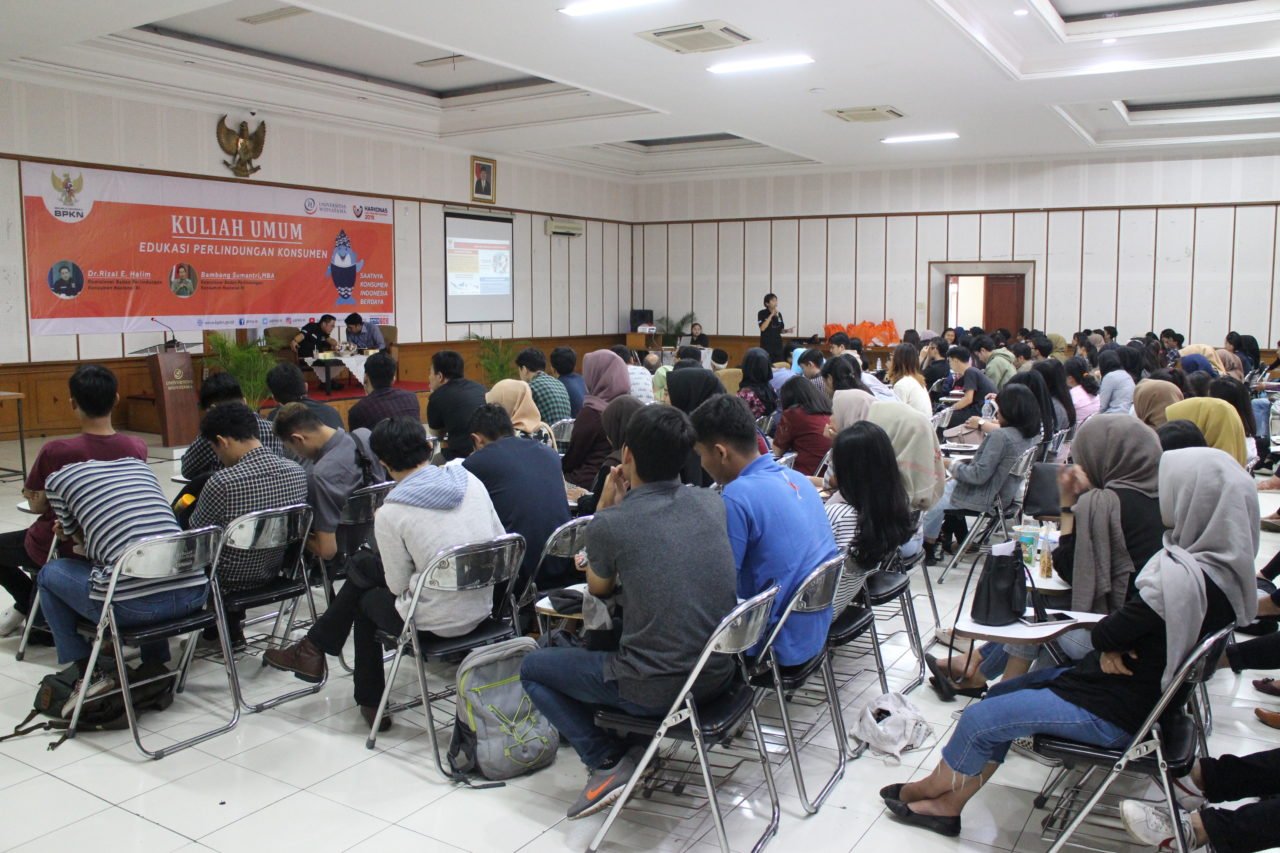
Bandung, March 12th, 2019 – BPKN has conducted simultaneous education to 11 universities in Bandung in the form of public lectures in commemoration of National Consumer Day. The public lectures were attended by around 1,000 students and set a MURI record for the number of participants in a public lecture in Indonesia.
The public lectures were held in collaboration between BPKN and the Higher Education Service Institution (LLDIKTI) Region IV West Java and Banten. The universities participating in this event were the Academy of Metrology and Instrumentation, Universitas Telkom, Institut Teknologi Nasional, Universitas Kristen Maranatha, Universitas Islam Bandung, IKIP Siliwangi, Universitas Muhammadiyah Bandung, Universitas Widyatama , Universitas Katolik Parahyangan, Universitas Kebangsaan, and Politeknik Bandung. Prof. Dr. Uman Suherman, Head of LLDIKTI Region IV, said, “LLDIKTI welcomes and thanks BPKN for helping to develop higher education institutions (PT) to be more broad-minded, especially in relation to consumer protection.”
“This public lecture is one of a series of events from HARKONAS, which is to conduct simultaneous education with the theme ‘It’s Time for Indonesian Consumers to be Empowered’, which aims to foster and increase student awareness of consumer rights and obligations,” said Rolas B Sitinjak, Deputy Chair of BPKN.
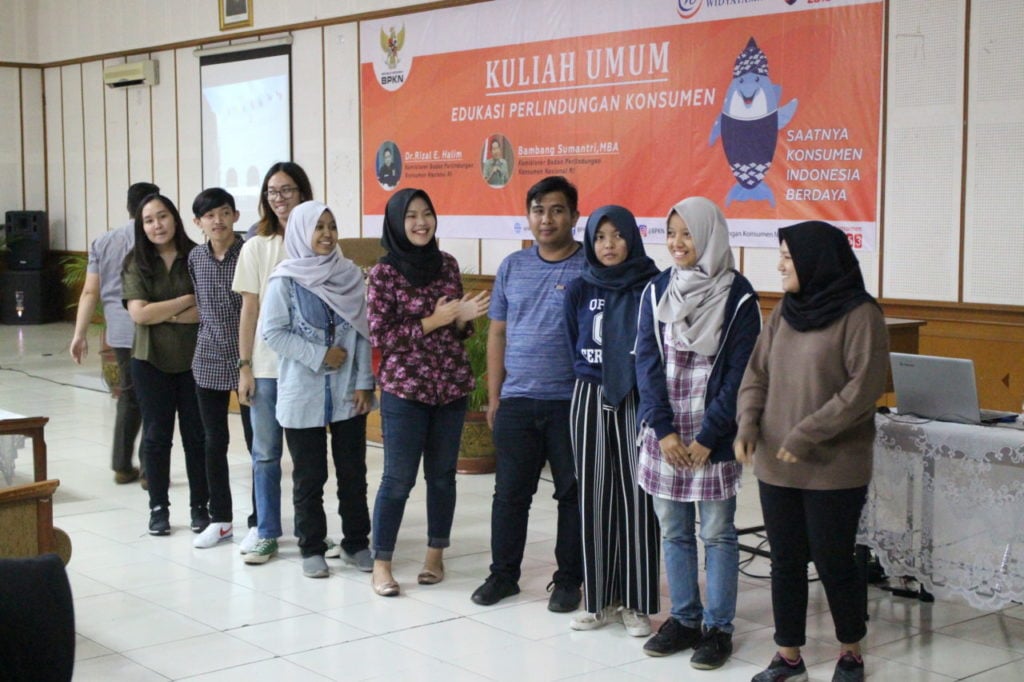
Consumer education is one way to convey to the public that consumers need to know and understand their rights and obligations as consumers. To that end, education is provided in the form of public lectures, with the hope that the Consumer Empowerment Index (IKK) will increase.
For your information, Indonesia’s Consumer Empowerment Index (IKK) in 2018 was 40.41 out of a maximum score of 100. This IKK score of 40.41 shows that consumers in Indonesia have the ability to defend their rights as consumers.
Of the seven dimensions measured, one dimension, namely Indonesian consumers’ knowledge of laws such as understanding their rights and obligations as consumers, as well as the institutions and roles of each Consumer Protection (PK) agency, is still low. This shows that consumers are not yet fully able to apply and fight for their rights.
The large number of complaints received by the BPKN proves that consumers are brave enough to fight for their rights, even though they are not yet fully capable of doing so, as evidenced by the sharp increase in the number of
complaints received by the BPKN from 107 in 2017 to 403 in 2018.
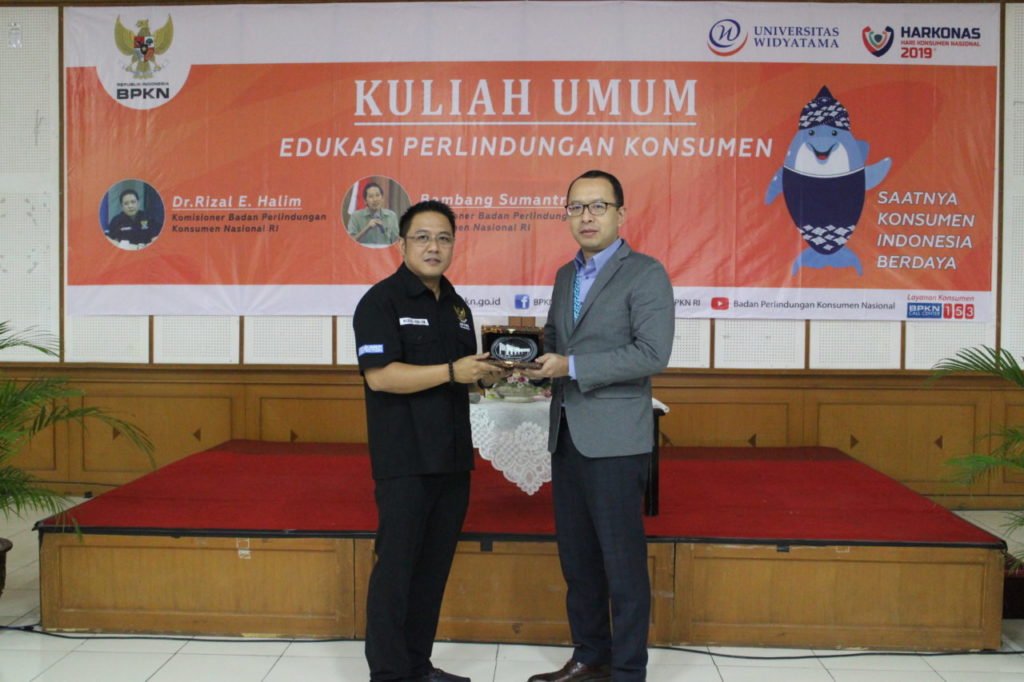
The BPKN together with the Secretary of the Widyatama Foundation, Ir. Roeshartono Roespinoedji
From January 1 to February 28, 2019, BPKN received 70 complaints, both indirectly (by mail, email, or the BPKN call center at 021 153) and directly at the BPKN office. The majority of complaints were in the housing sector, accounting for 75.71%. The complaints were divided into several sectors, including banking, consumer financing, health services, travel services, housing, e-commerce, etc.
To anticipate the large number of incidents and violations, BPKN urged the government to take strategic steps to ensure access to rights recovery and legal certainty for consumer protection. Moreover, the digital economy has the potential to disrupt the integrity of consumer protection. “Therefore, consumer protection institutions, regulations, and management must adapt and anticipate such rapid changes,” said Arief Safari, Coordinator of the BPKN Communication and Education Commission.
Empowering consumers is a long journey that involves a wide range of stakeholders. It takes energy to maintain the momentum of stakeholders so that they always have a high level of commitment to protecting consumers. The commemoration of National Consumer Day every April 20th is expected to remind all stakeholders to always remember and be committed to protecting and empowering consumers.
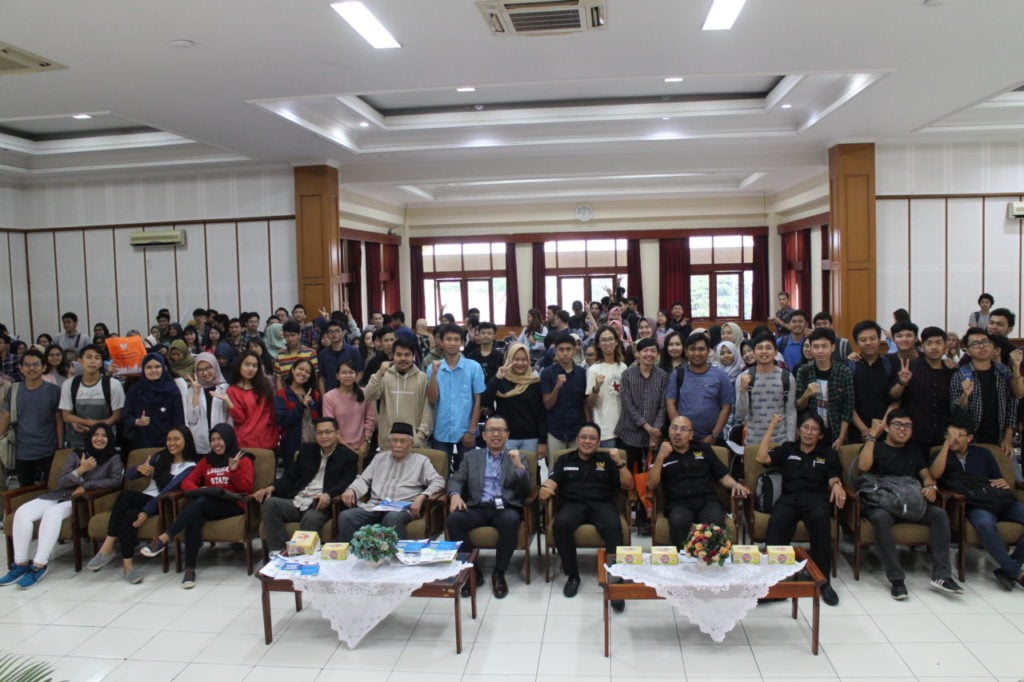
The state’s role in providing protection to consumers is regulated by law. To that end, Law No. 8 of 1999 on Consumer Protection was enacted. The Consumer Protection Law, which is commemorated on National Consumer Protection Day, stipulates that:
– Consumers must be made aware of their rights
– The central and regional governments are responsible for implementing consumer protection
– Business actors must be honest and responsible as stipulated in Article 7 of the Consumer Protection Law regarding the obligations of business actors
– Other consumer protection institutions, such as the National Consumer Protection Agency (BPKN), are reminded of their duties and responsibilities in the context of consumer protection, as are the communities that are members of the Community-Based Consumer Protection Agency (LPKSM).
“Harkonas is commemorated every year with the aim of increasing consumer awareness and empowerment. To that end, it is hoped that all stakeholders, not only ministries/technical government agencies but also other PK institutions such as BPKN, LPKSM, and even business actors and consumers, will actively participate in educating fellow consumers,” concluded Rolas.
In this regard, according to Arief Safari, “BPKN will collaborate with all elements of society to continue educating Indonesian consumers so that they understand their rights and obligations.” This public lecture is expected to enable students to become one of the front lines of smart, critical consumers who play an active role in fighting for their rights as consumers. “We hope that activities like this can continue,” continued Arief.