

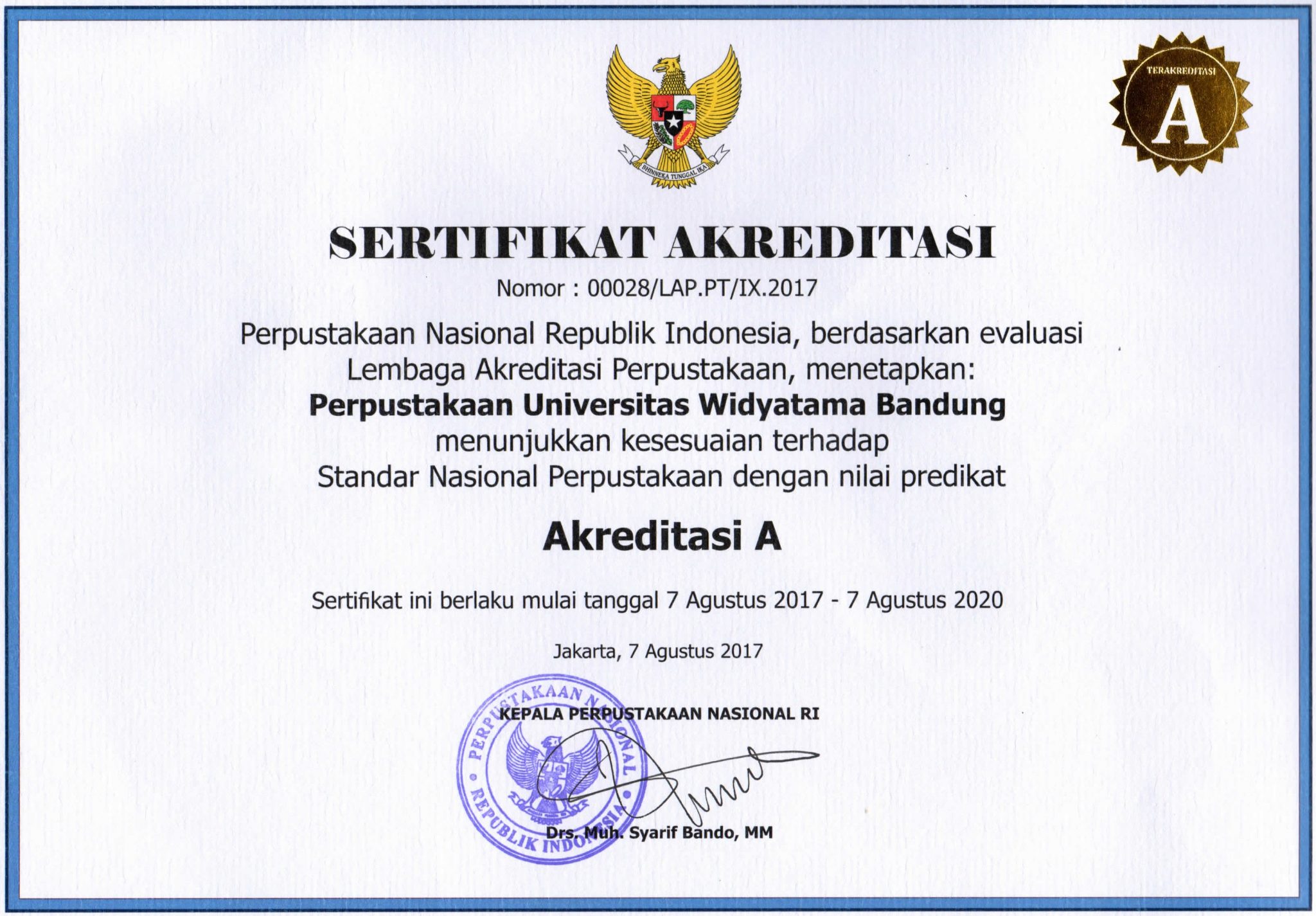
After receiving a visit from the assessment team of the National Library of the Republic of Indonesia on Tuesday (11/7), as of August 7, 2017, the Widyatama University Library achieved the highest accreditation, namely “A” Accreditation. This visit was conducted as part of the accreditation process for university libraries. This is the first time that the UTama Library has undergone library accreditation.
One form of formal recognition of library standards fulfillment is through library accreditation. Government Regulation No. 24 of 2014 states that accreditation is a series of formal recognition activities by an accreditation agency that declares that an institution has met the requirements to carry out certain certification activities. Library accreditation is a series of activities in the formal recognition process by a library accreditation institution that states that a library institution has met the requirements to carry out library management activities. Accredited libraries will receive an accreditation certificate. Furthermore, it can be added that recipients of library accreditation certificates have demonstrated that they have achieved a certain level in meeting library standards.
Library accreditation is an evaluation of aspects of library management to determine whether they comply with national library standards. Library accreditation is also an evaluation conducted by an external party to assess and encourage improvements in the quality and effectiveness of libraries. One of the objectives of accreditation is to improve accredited institutions, including universities. Libraries that do not yet meet the minimum standards as stipulated in the library standards must make improvements to their libraries in order to meet the minimum library standards.
In conducting library accreditation, there are several standards and guidelines that are used as references in the evaluation. These standards and guidelines include: National Library Standards (SNP), Indonesian National Standards (SNI) related to necessary components that are not yet covered in the SNP, quality management standards in library activities, relevant library accreditation guidelines, and other guidelines that have been developed (including the assessor code of ethics and the preparation of assessment reports).
Library accreditation activities provide many benefits for accredited libraries. Some of the benefits of library accreditation include building the quality of library institutions, determining the degree of standard fulfillment in a library, motivating library managers to develop libraries to a better and more professional level, enhancing the image of libraries, and increasing market or public recognition of library performance.
The academic community of Widyatama University congratulates the UTama Library on achieving an “A” accreditation rating.
May this be an inspiration to maintain and improve services to stakeholders.