

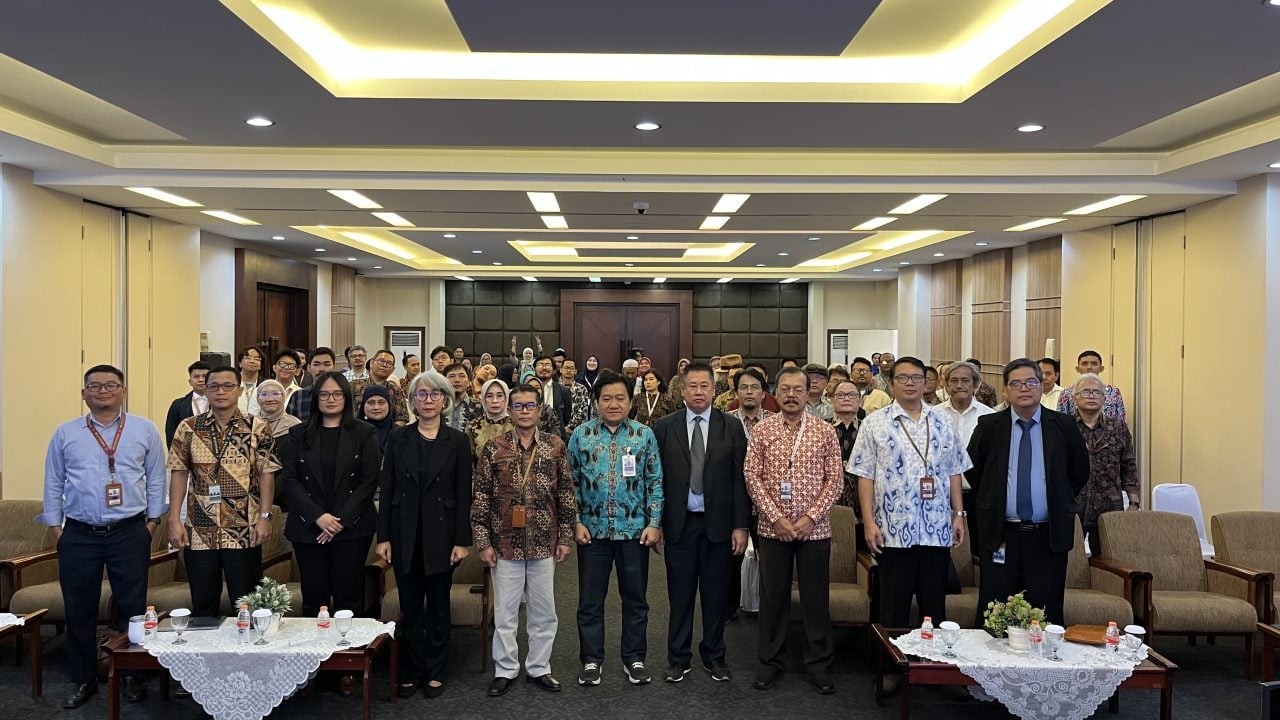
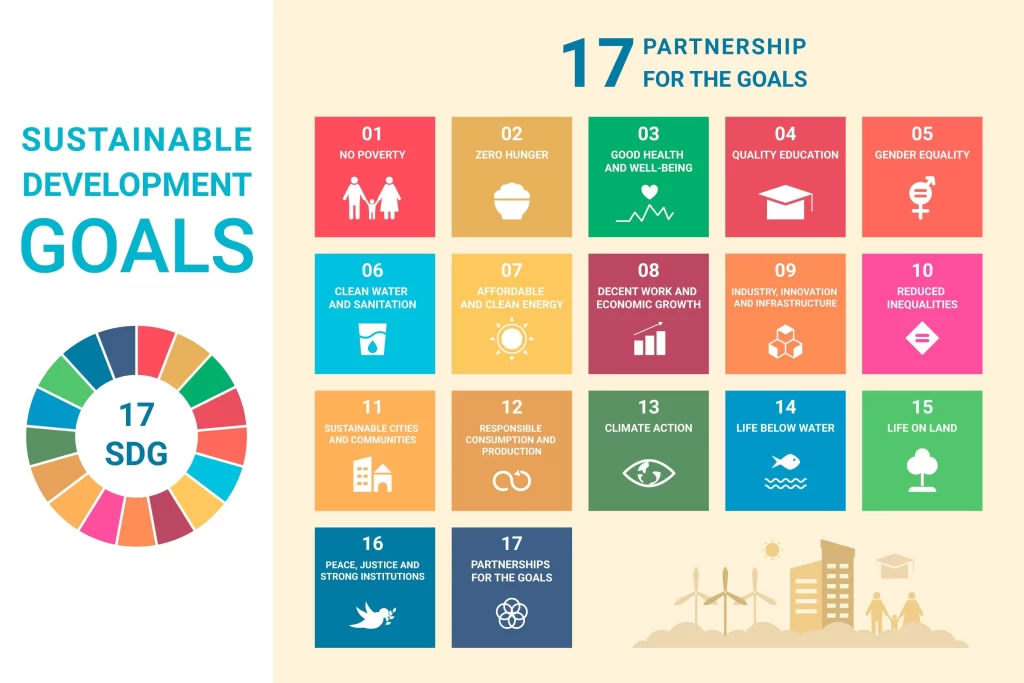
PIKIRAN RAKYAT – Widyatama University recently held the Widyatama International Conference with the theme “Digital Transformation: Innovation and Disruption.” This conference intended to discuss how digital transition can contribute to the achievement of Sustainable Development Goals (SDGs) in various sectors, especially in Indonesia. The conference presented experts from various fields, including social sciences, education, and energy, to discuss the challenges and opportunities arising from the rapid development of digital technology. Participants came from various countries, including Cambodia, Singapore, and Japan. When met by the Pikiran-Rakyat.com team, the Rector of Widyatama University, Prof. Dr. H. Dadang Suganda, M.Hum, emphasized the importance of international collaboration to achieve the SDGs. He hopes that this conference will produce concrete recommendations that can be applied in various sectors, especially entrepreneurship and education. “Therefore, we hope that this seminar will contribute to us, to the community, to the country, and to the world in the context of SDGs and entrepreneurship.
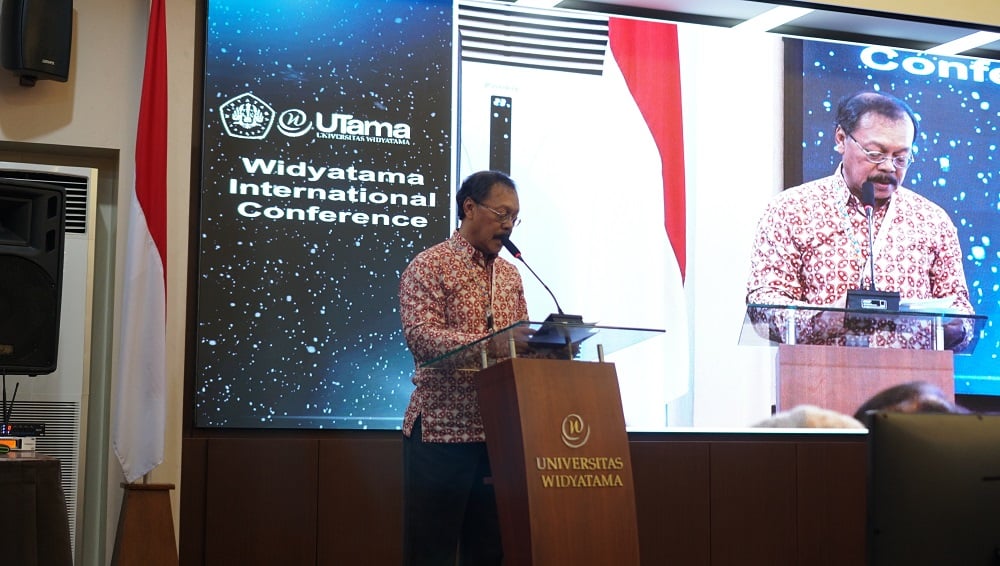
It is not without reason that this discussion is based on global conditions, one of which is climate change. Dadang revealed in his discussion with academics from Cambodia that climate change is one of the most highlighted issues. “There are many global issues, he said there are 20 issues, the first of which is climate change,” he said. Not only climate, but on the same occasion Dadang Suganda explained that digital developments, namely in the field of IT, and the property bubble are also global issues at present.
The Widyatama International Conference with the theme Digital Transformation: Innovation and Disruption opened with a discussion of social issues presented directly by a speaker from Cambodia, Ith Vuthy, MSc. MA. Ith Vuthy discussed the challenges of digitization in the Southeast Asian region, particularly in Indonesia. He highlighted the uneven access to digital technology in various regions of Indonesia and emphasized the importance of effective government policies to address this issue. “The vastness of Indonesia makes it difficult to achieve equitable digitalization,” he said on the occasion. Ith Vuthy expressed his opinion on the issue of equity in Indonesia, arguing that one possible solution is to implement digitalization programs tailored to the specific needs of each region.
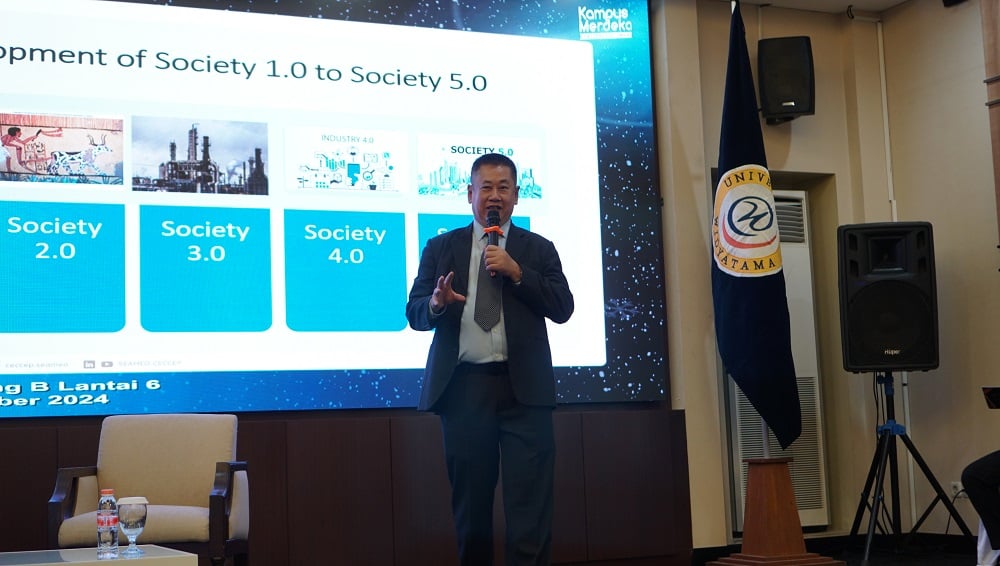
“Sometimes government policies are not properly implemented in the field,” he added. In addition to social conditions, the meeting also discussed the issue of education in the digitalization sector, which is currently underway, as presented by Prof. Dr. Sri Suning Kusumawardani. On that occasion, Sri revealed three problems that are currently occurring, namely: unequal access, inconsistent quality, and a lack of awareness of the importance of higher education. Another discussion topic was the energy system for achieving stability, which was presented by Dr. Eng. Muhammad Aziz from the University of Tokyo. On that occasion, Aziz highlighted the presence of electronic vehicles (EVs), which have an impact on natural conditions and energy utilization for daily life.