

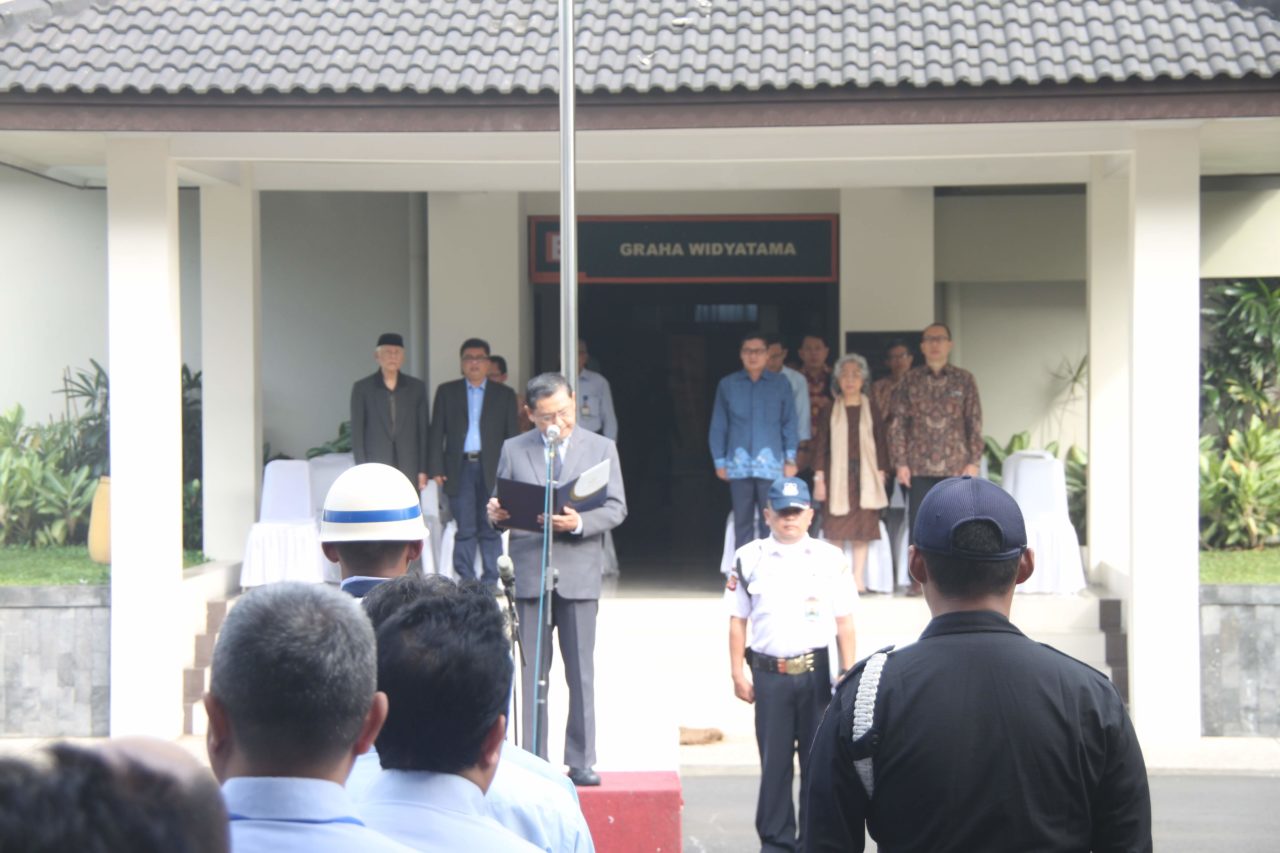
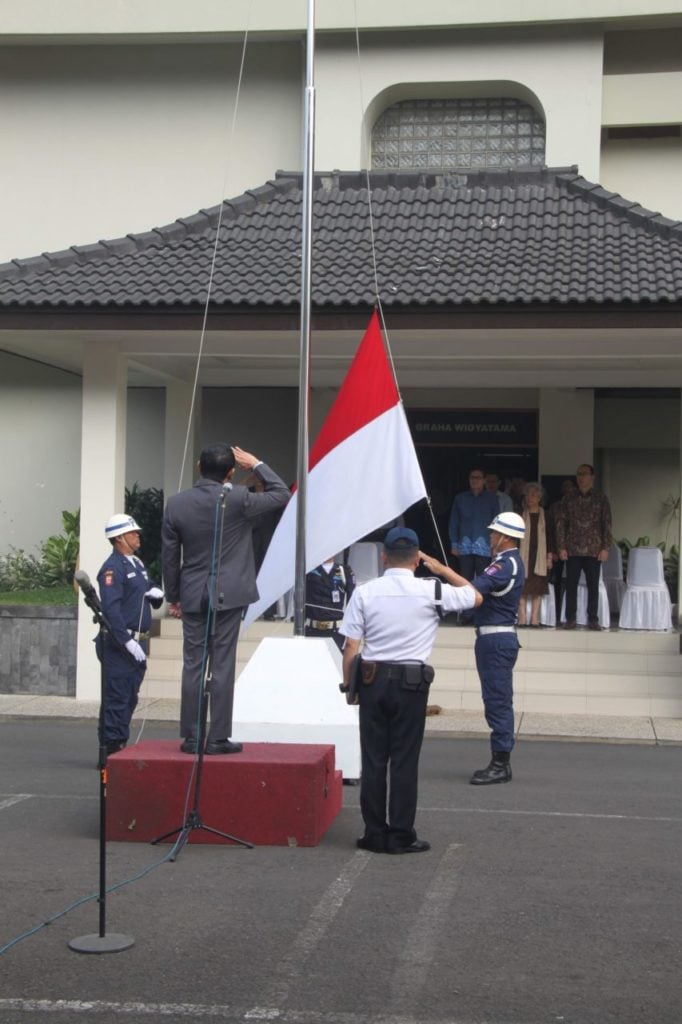
In commemoration of National Education Day, Widyatama University held a National Education Day Commemoration Ceremony in 2019 with the theme “Competitive, Innovative, and Characteristic Human Resources,” which was attended by all Foundation leaders, the Rectorate, and student representatives on Thursday (March 2) in the courtyard of the Widyatama University Multipurpose Building.
The ceremony began at 8:00 a.m. and was led by the Rector of Widyatama University, Dr. Islahuzzaman, S.E., M.Si., Ak., CA, as the Ceremony Advisor. On this occasion, the Ceremony Advisor read the speech of the Minister of Research, Technology, and Higher Education.
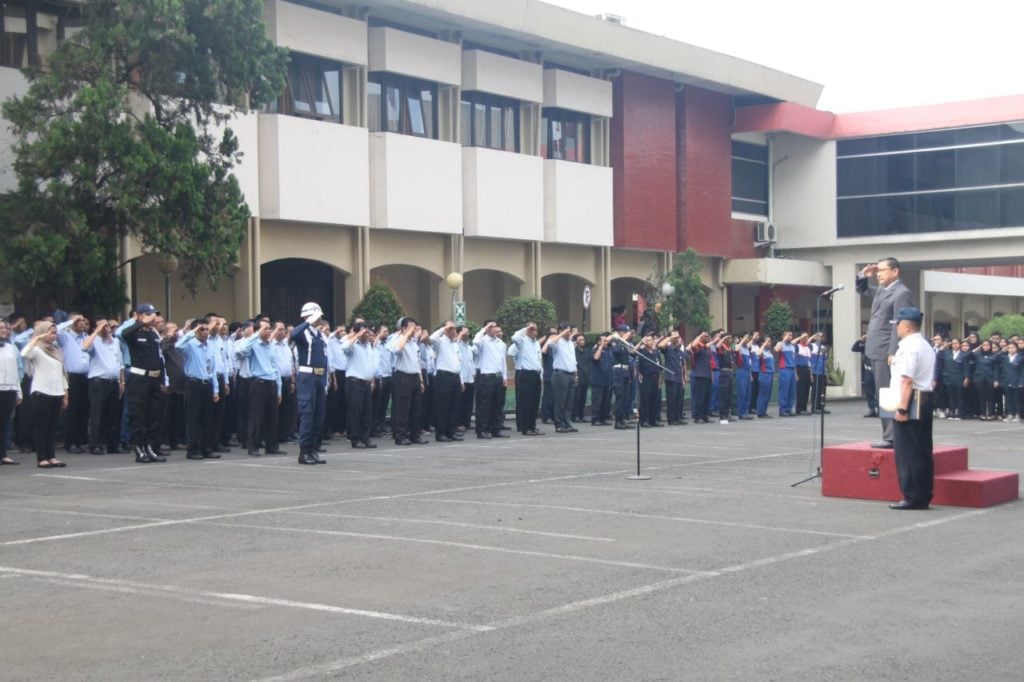
“The development of quality education is one of the targets of sustainable development or Sustainable Development Goals (SDGs) to promote the welfare of all people,” said the ceremony leader.
He further said that the software revolution has transformed economic activities, with some jobs being replaced by automation. This shift undoubtedly requires the education system to evolve and adapt.
Higher education in Indonesia continues to develop. There are currently 4,741 higher education institutions in Indonesia. However, with that many institutions, our gross enrollment rate in higher education in 2018 was still only 34.58%. This means that around 65% of children of college age are still unable to pursue higher education.
“In the higher education revolution, we can now find various types of online education, MOOCs (massive open online courses), and even cyber universities that have been developed by world-renowned universities, including several campuses in Indonesia, which offer various new courses such as big data, data analytics, entrepreneurship, and others, with the aim of equipping university graduates with the knowledge and skills needed to tackle the challenges of the future workplace.” He added
To enhance the competitiveness of higher education, universities in Indonesia are encouraged to improve their institutional accreditation to the highest level (A), including by increasing the quantity and quality of research and publications, fostering research collaboration at the national and international levels, and boosting student achievements to the international level. (Ed)