

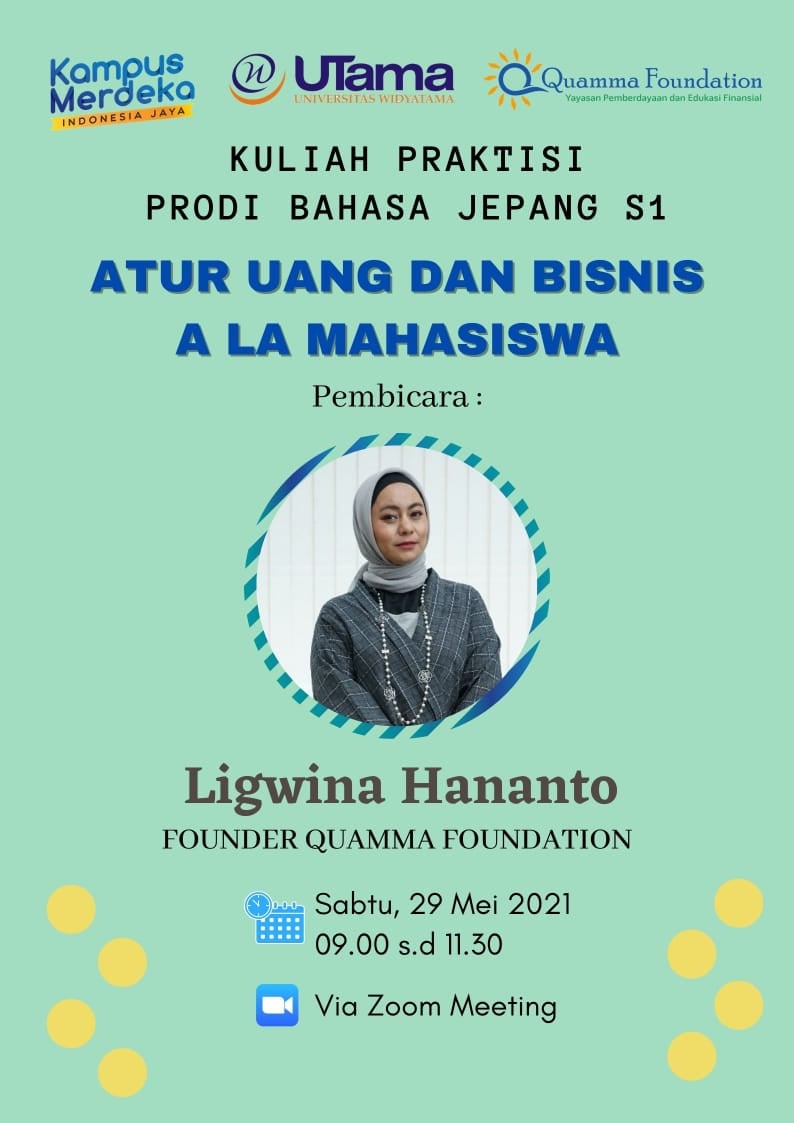
Renowned financial expert Ligwina Hananto was a speaker at a practitioner lecture for students of the Japanese Language Study Program, Faculty of Languages, Widyatama University (UTama) in Bandung, on how to manage money and start a business for students.
She shared several useful tips with participants of the webinar held via Zoom meeting, with the theme “Managing Money and Business Like a Student,” on Saturday (May 29, 2021).
Ligwina said that students must understand the concepts of Earning Money, Shopping, Giving Alms, Saving, and Investing (MBBMI).
“From a young age, we are taught to save money. But what is most important is learning how to manage our finances,” said Ligwina, who is also the founder and CEO of Quamma, a financial trainer, film artist, and economics lecturer, while presenting her material.

Ligwina Hananto, presenting the activity material
“This means that young people, such as college students, must be smart in managing the money they earn,” added Ligwina.
For students, money can be earned from pocket money, holiday bonuses, freelance work, and business ventures. The bottom line is that money comes from hard work. So understand how to make money.
Next, when it comes to shopping, according to financial experts and stand-up comedians, students will learn about the decision-making process. Will the money be spent on qualitative or quantitative items?
So that in the future, they can make decisions about shopping based on their interests or needs.
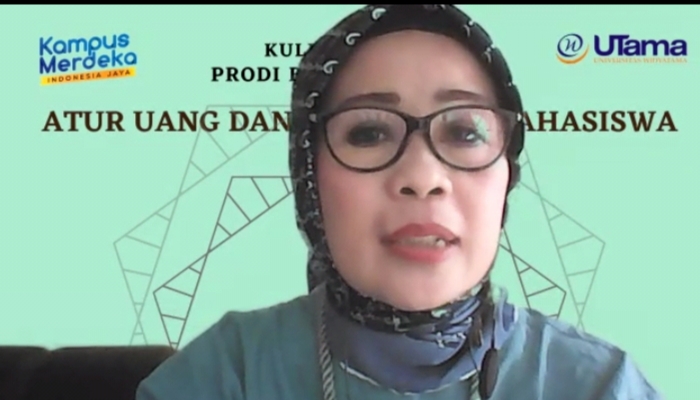
Deputy Dean of the Faculty of Languages, Uning Kuraesin, M.Pd
Then, when it comes to saving, Ligwina says that students must know their purpose for saving, so that there are benefits, motivation, and practice. Without these, many will fail.
“For example, saving up for quality items and knowing when to buy quantity items requires practice. Suppose I bought shoes for Rp 200,000, but they only lasted a few months. So, I enthusiastically saved up with the goal of buying more expensive shoes (Rp 2 million). After wearing them, the shoes turned out to be more durable and lasted more than two years,” he explained.
Next, sharing is equally important, because as Ligwina said, giving alms does not make us poor.
“Other people have rights to our wealth (money), such as orphans, the poor, mosque donations, and other donations. This can heal the soul,” said Ligwina.

Head of the Japanese Language Undergraduate Program, Dinda Ranadireksa, Ph.D.
Meanwhile, saving can also be used for investments such as continuing your master’s or doctoral studies, business capital, and much more.
Regarding starting a business, he gives tips on how to begin by learning how to trade.
“You can sell risoles, headscarves, coffee, and other items. The capital comes from your own money, not from borrowing. Focus on potential buyers, sell products that are in demand, be prepared to fail, lower your standards (don’t be pretentious), and so on. Because the age of 17-21 is important for experimentation. Usually, those who get rich quickly go bankrupt quickly,” said Ligwina.
Next, they must conduct surveys and sell goods that are truly necessary or needed by the community.
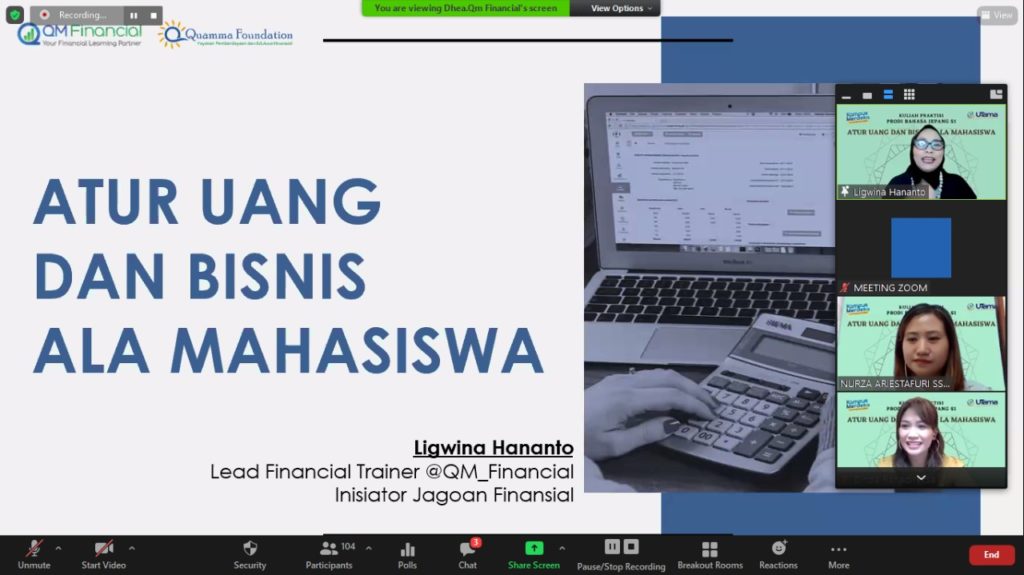
Meanwhile, Dinda Ranadireksa, Ph.D., Head of the Japanese Language Undergraduate Program at UTama, said that the purpose of holding the webinar was so that students of the Japanese Language Program could adapt to the needs of the times, especially during the pandemic, in support of the Independent Campus program.
“The ability to manage finances and do business will help students become independent in any situation and make it easier for them in the world of work later on,” said Dinda.
The participants of this Practitioner Lecture were all students of the Japanese Language Study Program S-1, D-III, students of the English Language Study Program, including Japanese language lecturers.
According to Dinda, student interest in the event was very high, as evidenced by the enthusiasm of the participants who asked questions in the chat column about how to manage income and expenses to stay within budget.
They also asked about how to manage a business with business partners to avoid conflict and how to build a business from scratch.
“With this activity, we from the Japanese Language Study Program at Widyatama University hope to bring benefits and inspiration to students in particular and lecturers in general,” concluded Dinda.
(Source: majalahsora.com)