

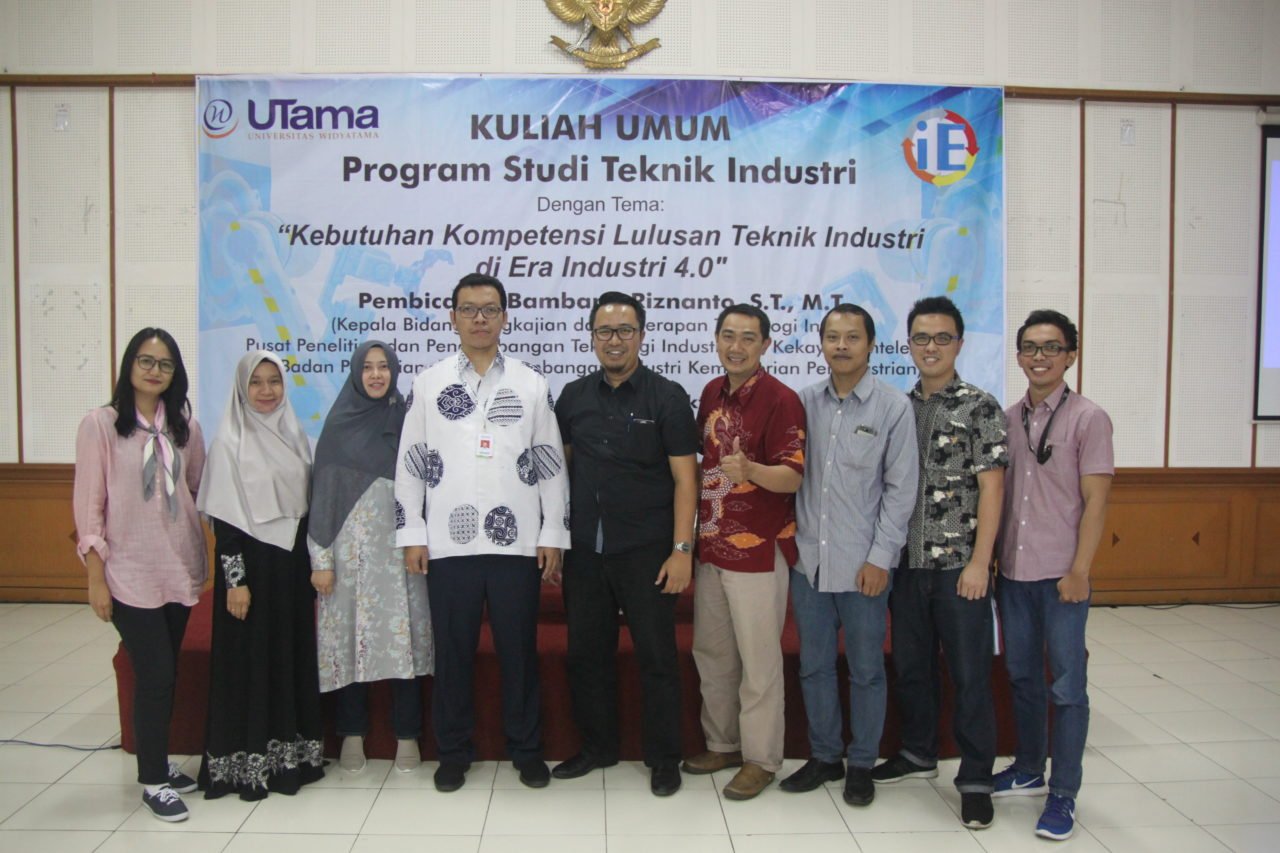
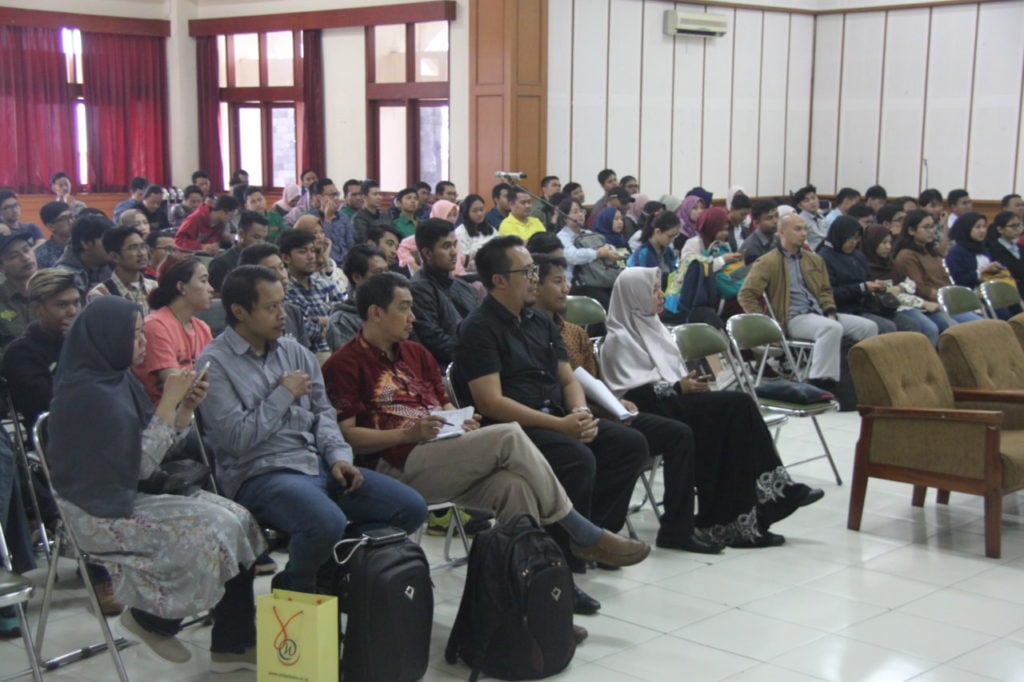
Bandung, (May 19) Head of the Industrial Research and Development Agency (BPPI) of the Ministry of Industry Bambang Riznanto encouraged students to pursue careers in the digital world and start-ups in order to be able to compete in the fourth industrial era. Bambang conveyed this message in a public lecture in front of hundreds of students and the Widyatama University (UTama) community in the Seminar Room on the 4th floor of Building A. The public lecture was themed “The Competency Requirements for Industrial Engineering Graduates in the Industry 4.0 Era.”
According to him, the current situation has undergone significant changes and has entered the era of the fourth industrial revolution, known as “Industry 4.0.” This change is marked by the development of digital technology integrated into industrial production processes. Therefore, he encouraged students to seize this opportunity by improving their skills and creativity, especially in the digital field. He suggested that the curriculum at UTama be integrated with digital methods to prepare students to become a generation with human resources capable of competing in the fourth industrial world.
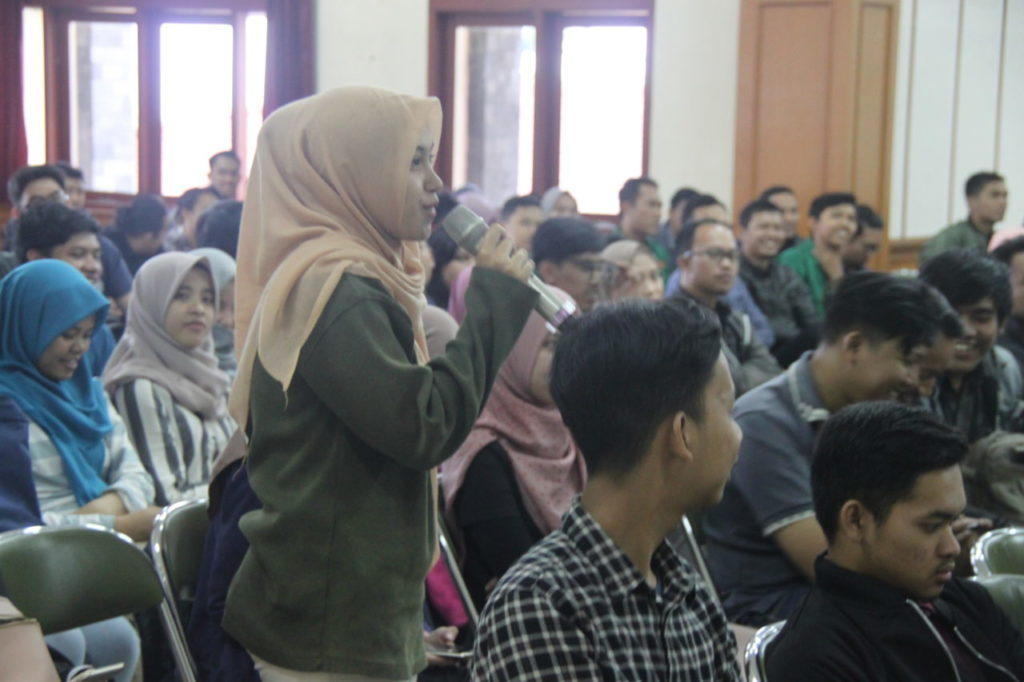
To that end, according to Bambang, Indonesia’s human resource strength also lies in the number of students. These young people are expected to seize opportunities by improving their skills and creativity, especially in the digital field. This is our shared responsibility, particularly in the education sector, especially universities, to produce competent human resources capable of creating innovation, he said.
On that occasion, Bambang quoted President Jokowi’s statement via the Indonesian Cabinet Secretariat’s Twitter account, which said that starting today, Making Indonesia 4.0 is designated as one of the national agendas of the Indonesian people, and the Ministry of Industry will be the leading sector for this agenda.
Bambang added that there are several paradigm shifts in the era of Industry 4.0. From designing only for manufacturing processes, it has changed to custom materials on demand. From mass production, it has changed to fewer stages of production. From global supply chains, it has changed to on-the-spot production and use.
Competition in the future will be even greater with the advent of the fourth industrial revolution. Future job demands will be higher and require scientific knowledge and skills. Therefore, early preparation is needed in order to face these changes and developments, said Bambang.