
The availability of clean water that is odorless and clear is a problem for people in urban areas.
This is also true in the city of Bandung, South Bandung, including South Cimahi, where the quality of well and ground water is generally odorous (iron smell) and cloudy (rusty yellow color).
Udin Komarudin, Ir., MT., Head of the Mechanical Engineering Program at UTama, explained that this occurs because the water contains high levels of iron (Fe), manganese (Mn), and sediments from industrial waste or factory discharges.
To solve this problem, the Mechanical Engineering Study Program, Faculty of Engineering, Widyatama University (UTama) provided a solution.
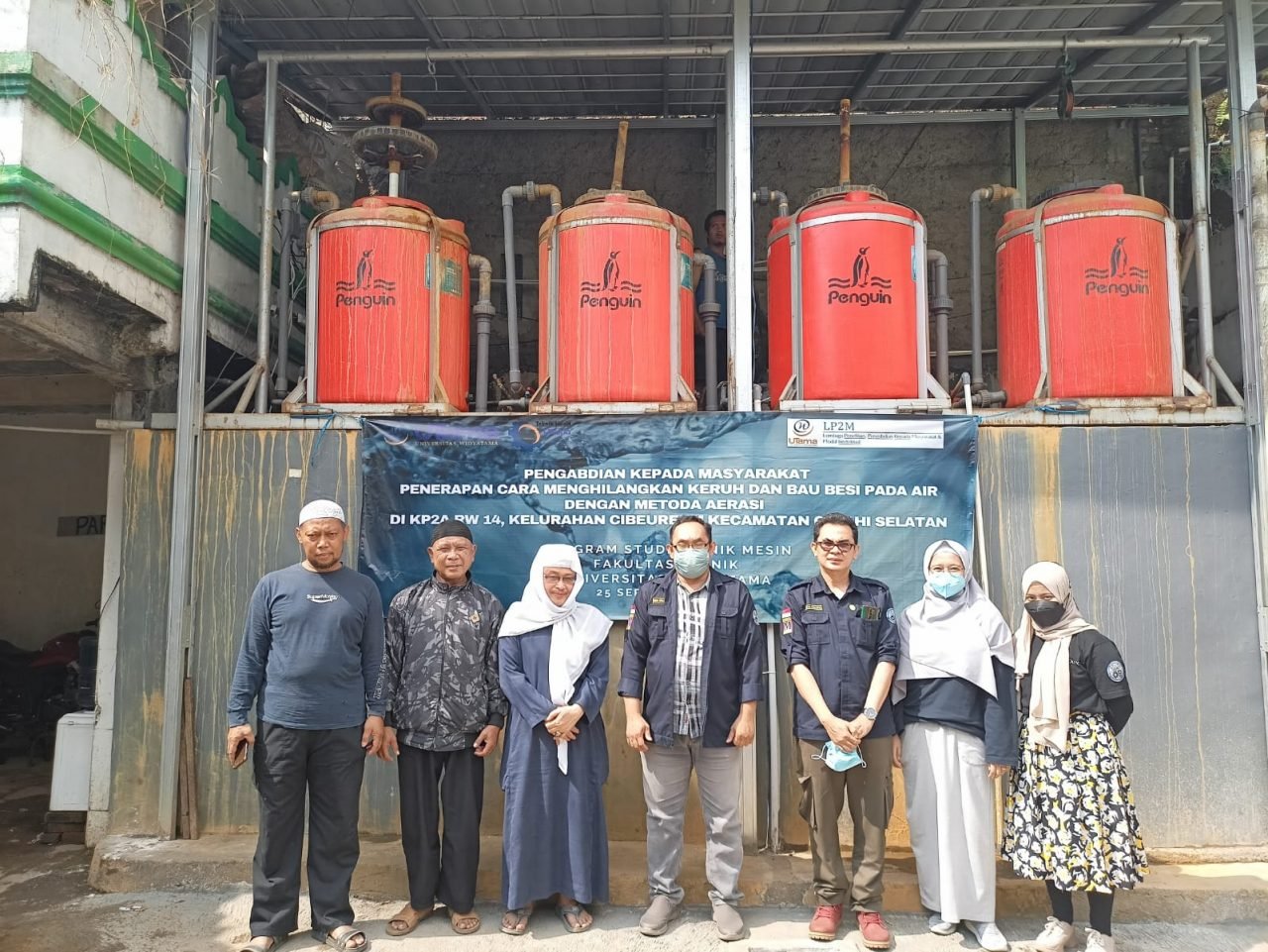
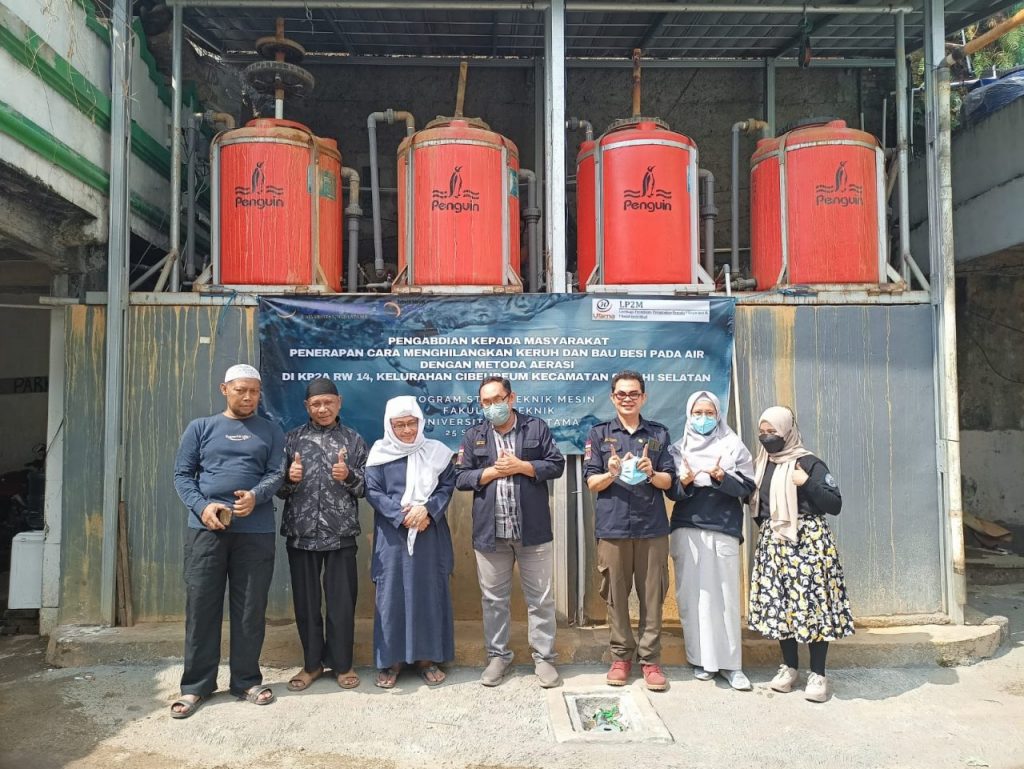
The Mechanical Engineering Study Program provided training to the Water User and Beneficiary Group (KP2A) in the Ranca Bentang Utara RT 05, RW 14 neighborhood of Cibeureum, South Cimahi, through a Community Service (PKM) activity.
“The activity was carried out on September 25, 2021. The aim was to improve the community’s ability to deal with smelly (iron smell) and dirty (yellow) water,” said Udin on Wednesday (9/29/2021).
“One of the processes to remove smelly and dirty water is through oxidation with air or aeration,” he added.
He further explained that aeration is one method to eliminate the problem of foul-smelling (iron smell) and dirty (rusty yellow color) water.
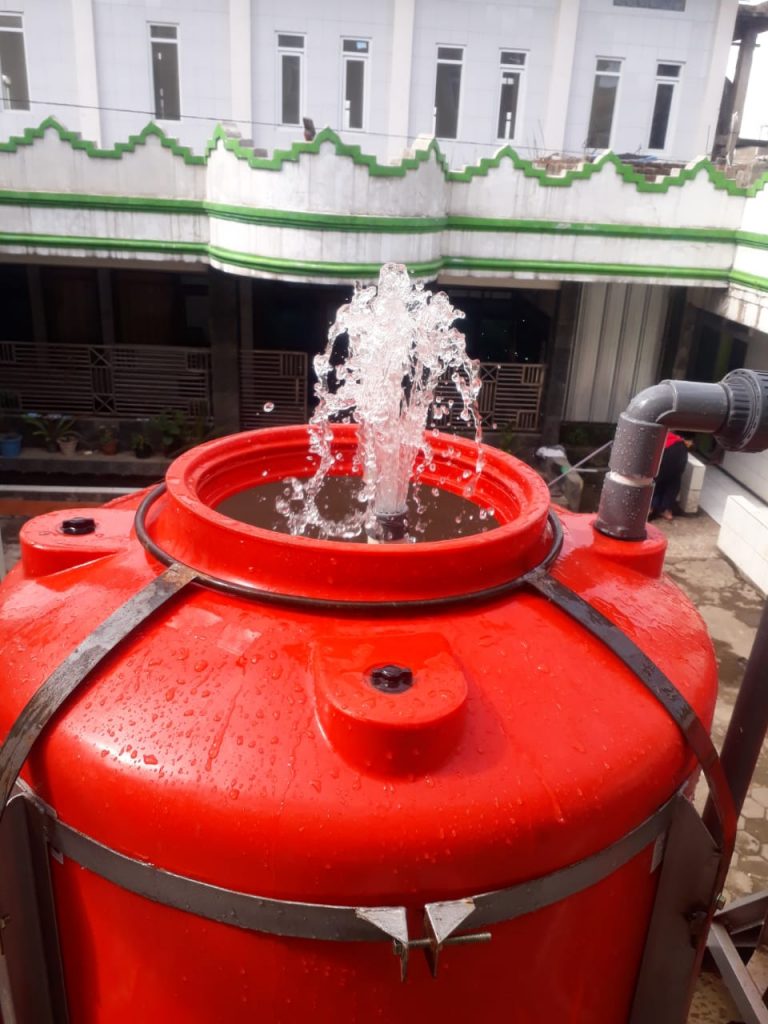
“The basic principle of aeration is that as much water as possible can react with air, either by introducing air into the water or by spraying water into the air,” explained Udin.
“The aeration method applied in this PKM is to push water up through PVC pipes, then spray it so that it forms like rainwater,” he added.
Udin hopes that with this PKM activity, the community can make their own aeration devices, thereby reducing the problem of foul-smelling and dirty water in the community.
(Source: majalahsora.com)