

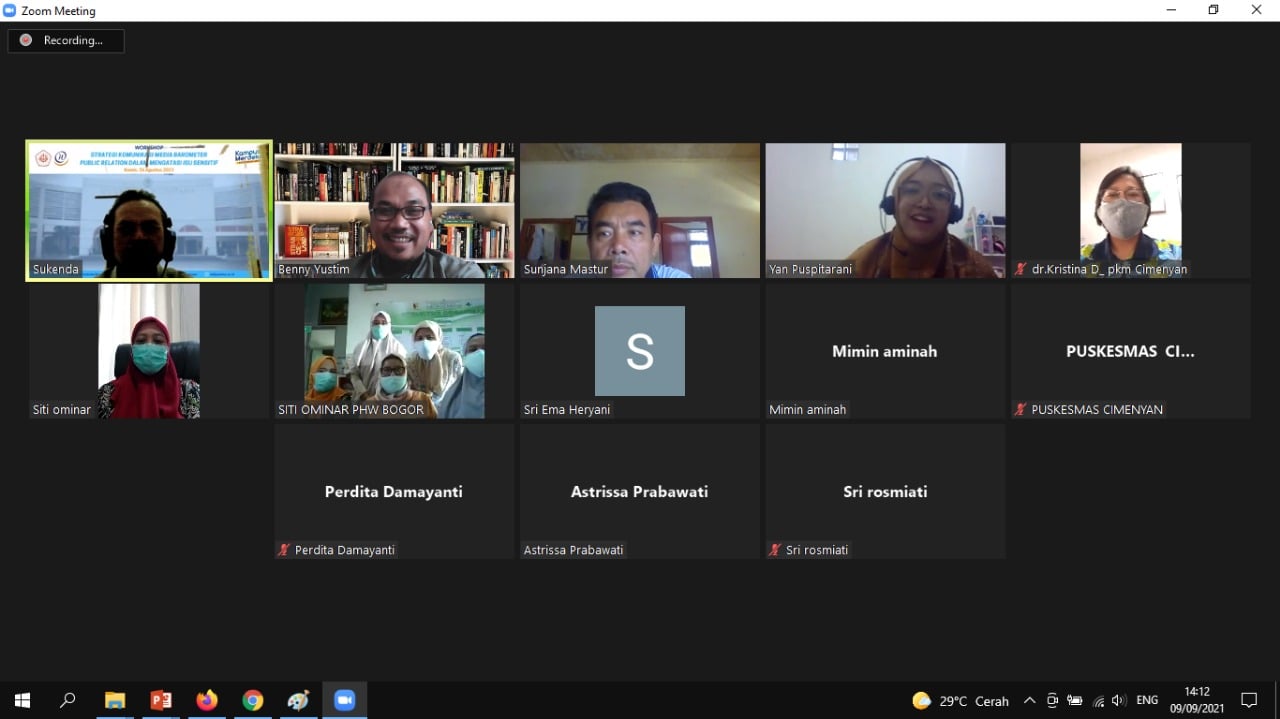
The high maternal and infant mortality rates in Indonesia are one of the main reasons why lecturers and students from the Information Technology Study Program, Faculty of Engineering, Widyatama University (UTama) have developed cloud-based software or applications for the Community-Based Hospital Concept (RSBM).
“The problems faced by the people of Indonesia are still very diverse. However, from several sources, one of the problems that remains a task for the government today is the high maternal and infant mortality rates,” said Benny Yustim, S.Si., M.T., Monday (4/10/2021).
According to him, the RSBM system itself is the result of research conducted by UTama lecturers and students to reduce maternal and infant mortality rates. RSBM is a very interesting concept in disease management, especially for cases involving pregnant women.
According to Benny, the RSBM works by recording data related to patients/pregnant women, such as the diseases they suffer from, and other information, by health workers when they come to the health center or village midwife.
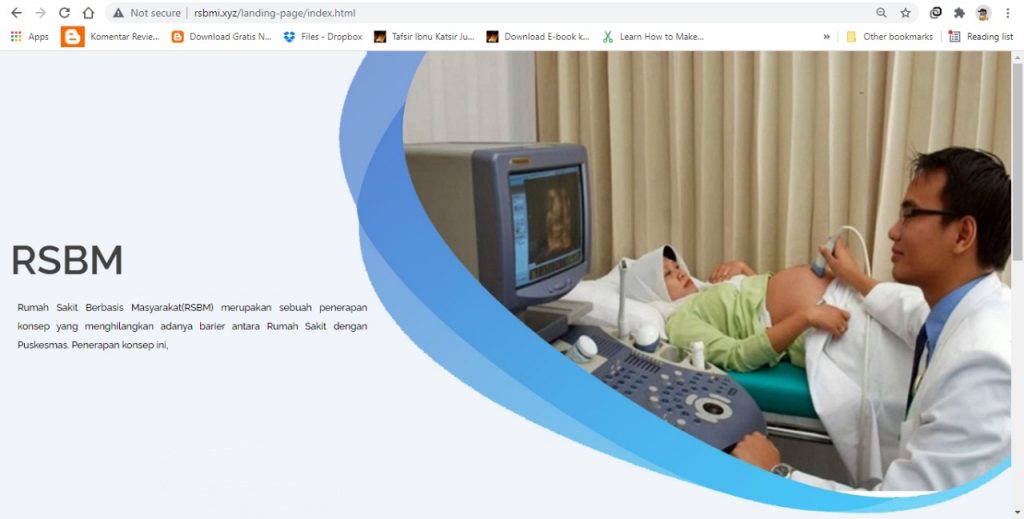
Thus, patients undergoing treatment will be reminded via SMS or messages on their Android phones to return to the health center for a check-up. This is adjusted to the availability of the doctor who has treated the patient.
“The data in this cloud system can then be accessed by various related parties, such as the health office, referral hospitals (clusters) and health centers (doctors, midwives, staff),” said Benny.
“This data will also serve as a reference for specialists at hospitals to provide counseling or treatment, so that the counseling or medical treatment provided will be more accurate,” he added.
In addition, stakeholders can also monitor data developments so that they can be used for policy-making.
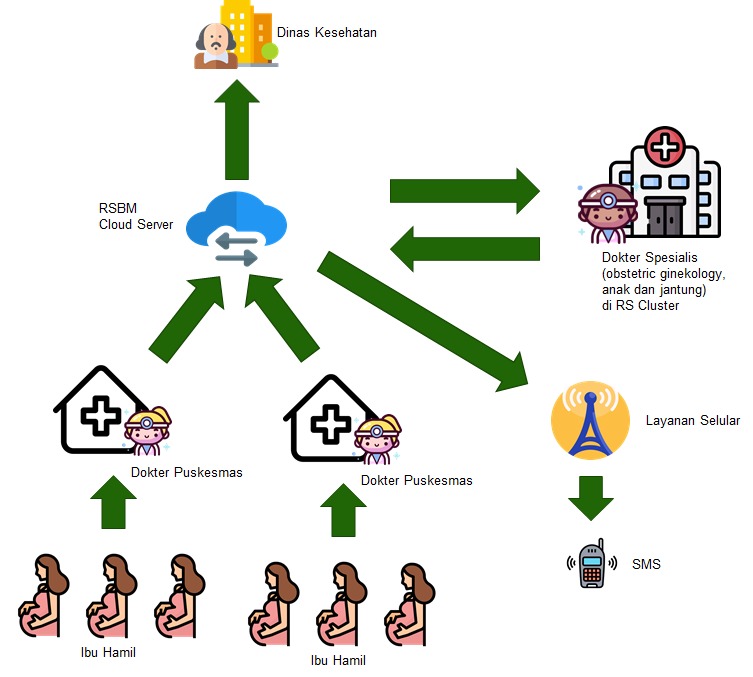
The system has also been implemented at the Kejaksan Community Health Center in Cirebon. Cirebon was chosen to implement the RSBM application because the number of maternal and infant mortality cases there is quite high, and it is hoped that this will reduce the number of cases in the Cirebon area. Coincidentally, Cirebon already has a local regulation related to this.
Community Service at the Cimenyan Community Health Center
To make it more widespread, information on the use of the RSBM application was also disseminated to other community health centers as a form of community service (PKM) by lecturers and students of Information Technology, UTama.
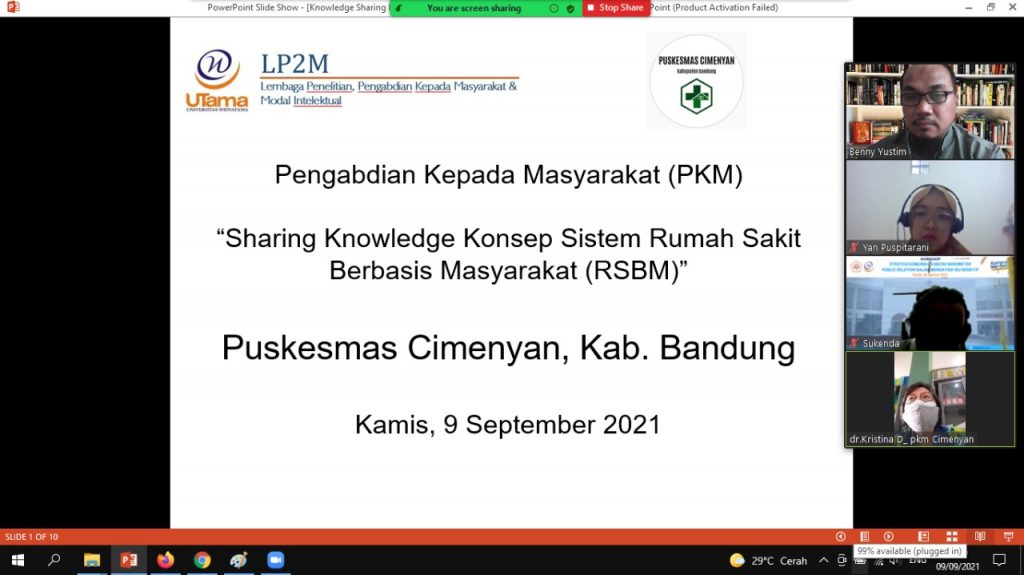
On Thursday (9/9/2021), they conducted a “Knowledge Sharing and Dissemination of the Community-Based Hospital System (RSBM) to Reduce High Maternal Mortality Rates (AKI)” activity in collaboration with the Cimenyan Community Health Center, Bandung Regency, led by Dr. Kristina.
During the event, the programs of the Cimenyan Community Health Center were presented, including those related to reducing high MMR/IAMR rates.
According to Benny, the implementation of this concept would be more effective if it involved technology as a supporting tool, as it would facilitate easy access to information regarding the condition of pregnant women in specific areas. Additionally, appropriate interventions could be provided based on regional cases, following the division of clusters between Community Health Centers and Referral Hospitals.
According to Benny, the development of the RSBM system, which has been running for some time, requires input from various parties in different regions.
“This is to identify potential problems that may arise and potential solutions that can be implemented and developed in the future,” said Benny.
He also explained that ease and speed of access to information are key to the developed system. This allows medical personnel to provide treatment based on patient history.
This is also expected to be supported by various strategic and dynamic policies from local government officials. Thus, the policies taken will greatly depend on the situation and conditions that develop at a particular time and place.
With the PKM activity, said Benny, it will enrich the researchers’ perspective in developing the system in the future.
Additionally, the central and regional governments, through existing policies, are striving to address this issue as much as possible.
(Source: majalahsora.com)