
As the railway industry in Indonesia continues to grow rapidly in terms of facilities, infrastructure, and technology, including improved safety and a decline in accidents to the point of “zero accidents,” PT Kereta Api Indonesia (KAI) Persero continues to innovate.
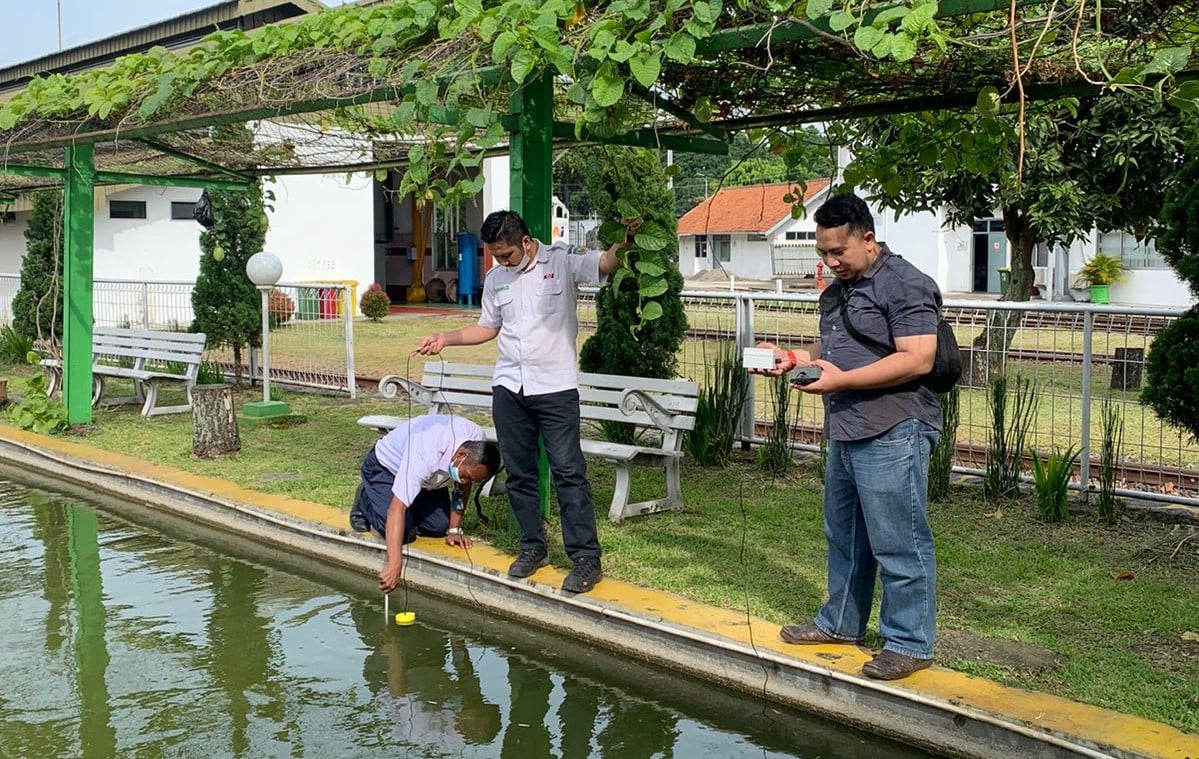
PT KAI’s efforts to create safe transportation include conducting routine inspections of existing facilities and infrastructure, such as bridge inspections carried out by the Track & Bridge Engineering Maintenance Unit.
“Currently, riverbed measurements on railroad bridges are still done manually. The methods used are still conventional, requiring a lot of personnel, equipment, and costs for the measurements,” said Dicky Arisikam, S.T., M.T, QRMP, IPM, Manager of Track & Bridge Engineering Maintenance at PT KAI (Persero) and leader of the PEDAS Research Team, recently.
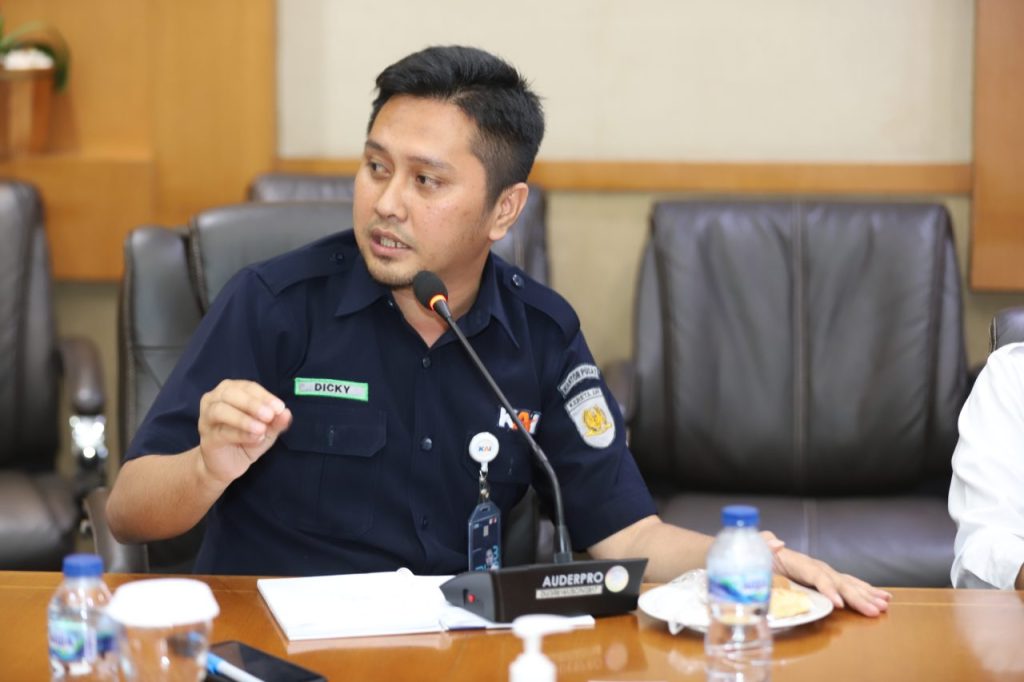
Dicky Arisikam, S.T., M.T, QRMP, IPM, Manager of Track & Bridge Engineering Maintenance at PT KAI (Persero) during a meeting with the Civil Engineering Study Program, Faculty of Engineering, Universitas Widyatama
“The results obtained are also considered to be inaccurate. In addition, in terms of safety, there is still a potential danger to the measuring officers. Therefore, a method and tool for measuring river bases is needed that is easy to use and provides accurate results, thereby reducing the number of officers, costs, and the risk of work accidents,” he added.
Based on this, PT KAI’s Track & Bridge Engineering Maintenance Unit collaborated and established joint research with the Civil Engineering Study Program, Faculty of Engineering, Universitas Widyatama (UTama).
The reason for choosing the UTama Civil Engineering Study Program was based on the success of several cooperation programs that had been realized and considered successful by PT KAI.
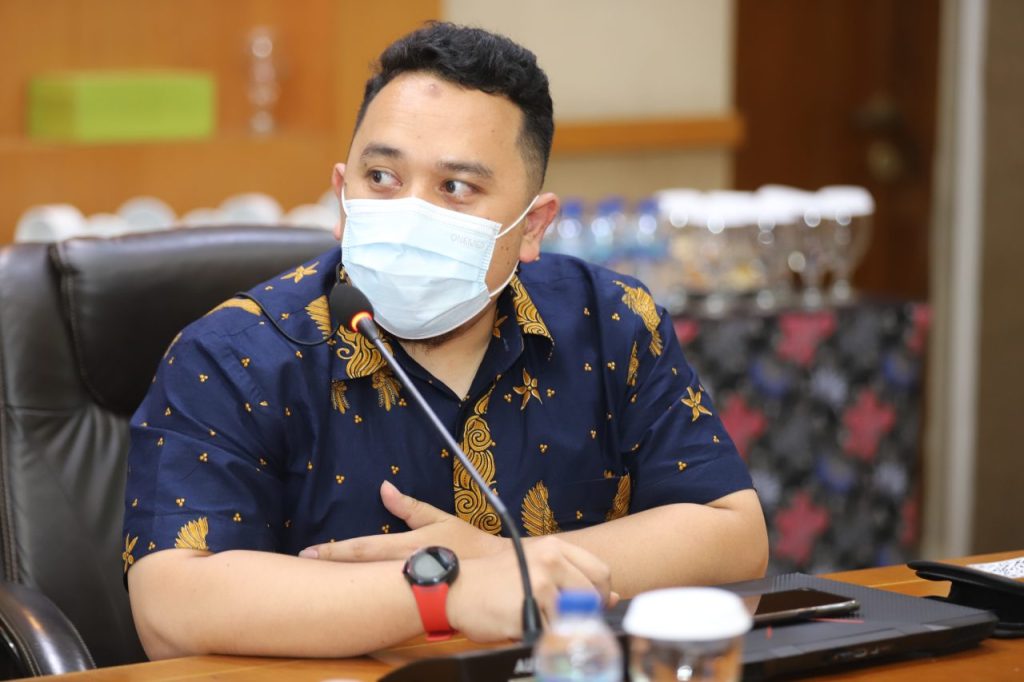
Presentation of the PEDAS Tool by Raden Herdian Bayu Ash Siddiq, S.T., M.T., as Head of the Research Team, at a meeting between PT KAI (Persero) and the Civil Engineering Study Program, Faculty of Engineering, Universitas Widyatama.
In relation to this, Yanyan Agustian, S.T., M.Eng., Ph.D, Head of the Civil Engineering Study Program at UTama, explained that this research collaboration is a concrete manifestation of the implementation of Merdeka Belajar Kampus Merdeka (MBKM) at UTama, particularly in the Civil Engineering Study Program.
“Praise be to God, the Widyatama Civil Engineering Study Program is currently entrusted with creating and developing this Level 1 River Base Estimation Tool (Pedas). Hopefully, this tool can assist and facilitate the work of KAI officers in the field,” said Yanyan on Monday (1/31/2022).
Meanwhile, Raden Herdian Bayu Ash Siddiq, S.T., M.T., Head of the Research Team, added that the research and development of the Level 1 PEDAS Device took approximately three months, starting in October 2021 and ending in December 2021.
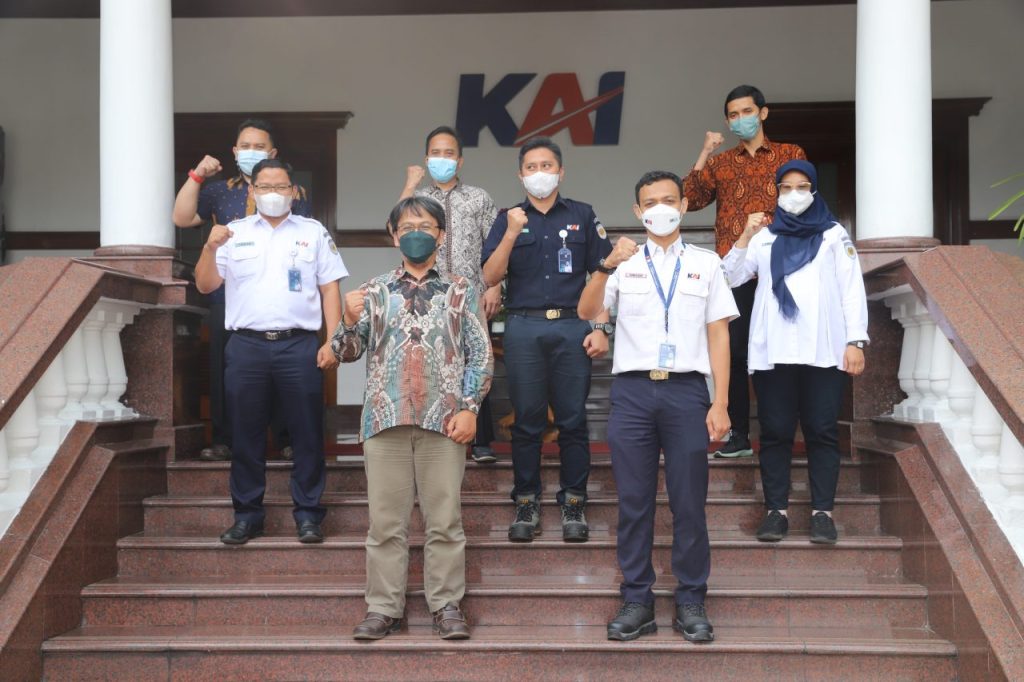
Yanyan Agustian, S.T., M.Eng., Ph.D, Head of Civil Engineering Study Program, Universitas Widyatama (front left)
“Alhamdulillah, we were able to complete it in December 2021. This Level 1 PEDAS device can measure the depth of a river from a bridge with a height of approximately 20 meters and can be operated by only one person,” said Raden Herdian Bayu Ash Siddiq.
“The output of this PEDAS Level 1 device is the riverbed elevation in meters above sea level (MASL) and its depth in centimeters (cm), measured from the water surface level,” he added.
Meanwhile, Dicky Arisikam, as the director of the PEDAS Research Team, revealed that several trials had been conducted in collaboration with PT KAI with satisfactory results.
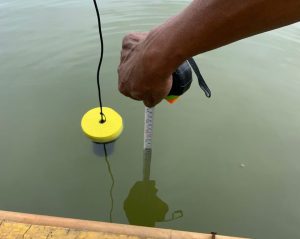
The research and development of the Level 1 PEDAS Tool took approximately 3 months.
He also hopes that the development of the next level of PEDAS will improve its functionality and make it easier for field officers.
“From the test results, this Level 1 PEDAS device can produce fairly accurate depth measurements with an average maximum error of 3 cm. For further development at level 2, it is hoped that this PEDAS device can be made more practical, wireless, and developed into an application, thereby making it easier for officers to use in the field,” said Dicky Arisikam.
The research team for the PEDAS device consists of Raden Herdian Bayu Ash Siddiq, S.T., M.T (Lecturer in Civil Engineering) as team leader, Resa Pramudita, S.Pd., M.T. (Lecturer in the Electrical Engineering Program) and Muhammad Adli Rizqulloh, S.Pd., M.T (Electrical Expert) as members.
(Source: majalahsora.com)