
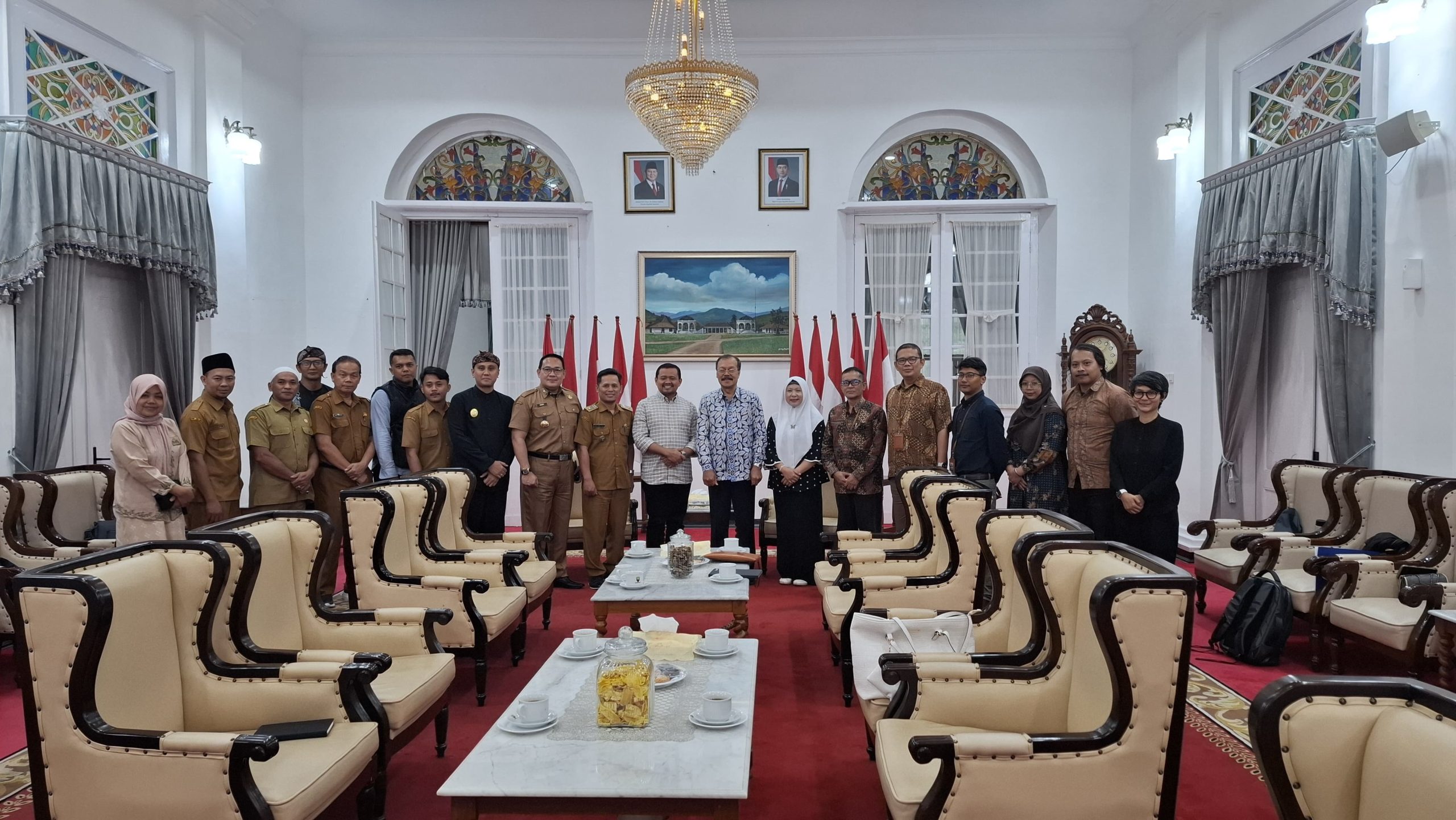
Sumedang Regency, West Java, April 21st, 2025 – An important step towards innovation-based village development and international research networks has been taken through a strategic collaboration between Universitas Widyatama (UTama) and INTI Universiti Malaysia. Held at the Sumedang Regency State Building, the two higher education institutions were received directly by the Regent of Sumedang, Dr. H. Dony Ahmad Munir, S.T., M.M., in an official audience agenda focusing on village technology development, digital transformation of tourism, and strengthening local food security.
The delegation from UTama, led by Rector Prof. Dr. H. Dadang Suganda, M.Hum., along with the vice rectors in charge of facilities and budget as well as research and university cooperation, and a team of researchers, was accompanied by Dr. Deashinta, an AI expert from INTI Universiti Malaysia, presented cross-border research ideas that not only touched on technological aspects but also addressed the social and cultural roots of Indonesian rural communities.
Internationalization of Research for Innovative Villages
This step is part of a strategic higher education internationalization scheme, in which research collaboration no longer stops at academic exchange, but continues in the form of co-creation of knowledge that has a direct impact on society. These collaborative projects are designed as models for technology transfer and local capacity building, which can be replicated in the ASEAN region.
“Through this research collaboration, we not only want to provide technological solutions, but also build a contextual, participatory, and sustainable approach,” said Prof. Dadang Suganda. “We see Sumedang as an area with great potential to become a global model for research-based village innovation.”
Green Technology and Digitalization of Village Tourism
One of the topics discussed during the hearing was the development of an e-tourism platform that utilizes a digital approach to support community-based tourism promotion at the Putera Jaya Fishing Pond in Cileles Village. This project not only digitizes local potential, but also promotes green technology to maintain the sustainability of the village environment.
With support from the Matching Grant program involving Sri Lestari, Ir., MT. (Information Systems), Ari Purno, M.Kom. (Computer Science), and Ajeng Mayang K S, M.T. (Electrical Engineering) from Widyatama University and Dr. Deashinta from INTI University, Malaysia, this research is expected to serve as a reference in the development of digital ecotourism that is adaptive to changing times without sacrificing local traditional values.
Food Security as a Pillar of Regional Independence
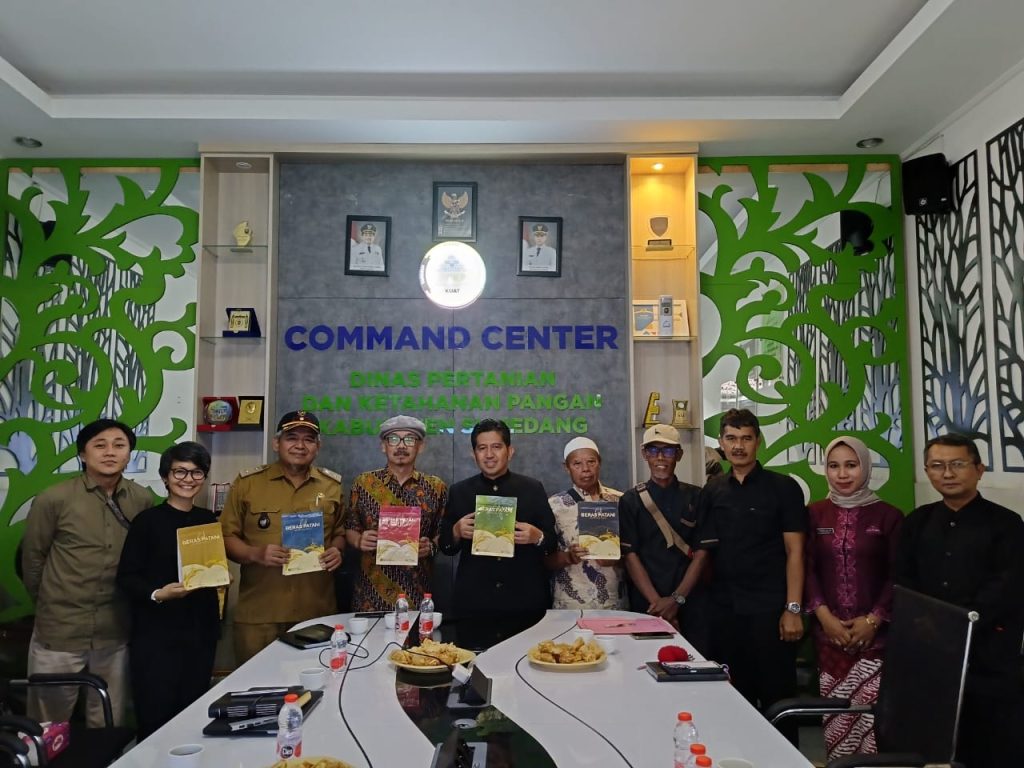
On a different occasion, this research collaboration also included the development of leading local agricultural products, one of which was marked by the confirmation of the packaging design for Organic Rice from Cikurubuk Village. Through collaboration between Widyatama University and the Sumedang Regency Agriculture and Food Security Office, two main brands were launched: Patani Rice, aimed at middle-to-high-end consumers through BUMDes, and Asmara Rice (Asli Sumedang Maknyus Rasanya), which is marketed by village cooperatives.
This innovation not only boosts the economic value of local products but also serves as a social movement to raise awareness about healthy and local food consumption.
The momentum of Sumedang’s 447th anniversary: A symbol of commitment to regional progress
The launch of this organic rice packaging design was held to align with Sumedang City’s 447th anniversary, making it more than just a ceremonial event. It became a symbol of collective commitment to lead Sumedang towards sustainable development, which is not only relevant locally but also recognized regionally and internationally.
ASEAN Network for Village Independence
This cross-border cooperation reflects a new orientation in higher education in Southeast Asia, where global challenges such as food security, climate change, and digital transformation are addressed through collaborative and applied approaches. This cooperation model is expected to pave the way for the development of the ASEAN Village Innovation Center in the future, with Sumedang as its epicenter. In this regard, the Regent of Sumedang, Dr. H. Dony Ahmad Munir, emphasized his full support for Universitas Widyatama in making Sumedang Regency a locus for research and the commercialization of research results.
With a transdisciplinary approach that combines technology, social design, sustainable agriculture, and tourism digitization, this collaboration not only strengthens the foundations of village development but also serves as a concrete manifestation of internationalization that directly impacts communities.
This initiative is part of the higher education internationalization agenda supported by the Matching Grant program and the ASEAN inter-country research network. Widyatama University and INTI Universiti Malaysia are pioneers in integrating research results with the real needs of rural communities.
By: Deden Maulana & Atri Nadia